 Reactiva
LEARN
Understand better what you train and why.
Clear articles on neurorehabilitation, speech therapy and cognitive stimulation — to understand what lies behind everyday training.
Your training 5

Understanding your cognitive training better
A simple guide to understand what you're training, why some days are harder, and how to use Reactiva+ with more calm, sense, and consistency.
6 min read
How to Choose Your Training
A simple guide to training with purpose: choose a few challenges, adjust the difficulty, and respect your daily condition.
2 min read
Recovery is not linear
The article discusses the fluctuating nature of progress, emphasizing that there are good days, bad days, and advancements that may not be immediately noticeable. It provides insights on how to better interpret progress when the actual trajectory resembles a zigzag rather than a straight line.
3 min read
Mental fatigue after a stroke
This article discusses how cognitive fatigue can impact speech, gait, calculation, and writing, why it cannot be resolved simply through willpower, and how to recognize it in order to improve training strategies.
3 min read
Daily Training After a Stroke
How to practice daily without falling into overload or obsession: why an effective session doesn't have to be huge, and how to tell if your training pace is well calibrated.
3 min readNeurology 6
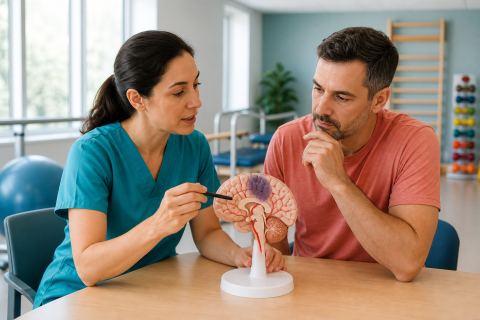
What is a stroke?
The article discusses what happens in the brain during a stroke, the two main types of strokes, the warning signs to look out for (FAST), and highlights the importance of cognitive rehabilitation for recovery.
6 min read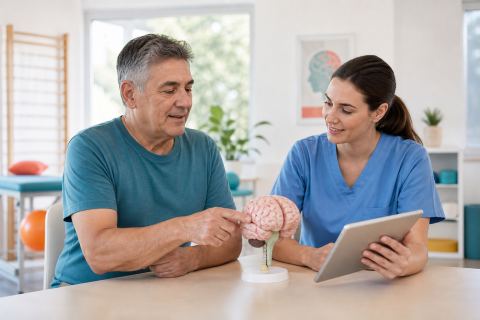
What is a stroke and how does it affect?
A simple explanation of what happens when the brain stops receiving blood in a certain area, why symptoms vary so much from person to person, and why recovery continues even after medical discharge.
3 min read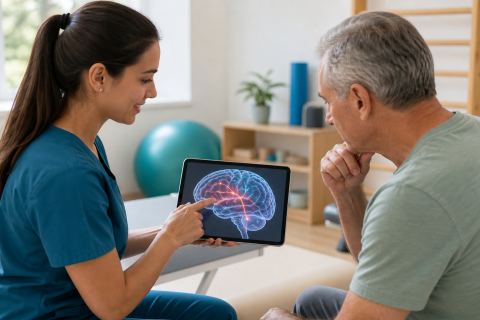
What Happens in the Brain After a Stroke
Inflammation, reorganization, fatigue, and network reconstruction are processes that occur in the brain after the acute phase of a stroke, which can explain the significant fluctuations in performance from day to day.
3 min read
Neuroplasticity After a Stroke
The article discusses how the brain can reorganize itself, create new pathways, and regain functions through practice, highlighting the concept of neuroplasticity and its role in rehabilitation.
3 min read
The Brain and Its Networks
A clear explanation of how the brain functions as a network of interconnected areas rather than as isolated pieces.
2 min read
Typical evolution after a stroke
What to expect in phases: the first weeks, the first months, and the intermediate months of recovery, and how understanding this timeline helps to avoid confusing a bad day with a setback.
3 min readNeuropsychology 10

Is it true that we can't do two things at once?
A recent study nuances the myth of impossible multitasking: with practice, the brain can automate one task in order to attend to another at the same time.
3 min read
Neuropsychological Assessment After a Stroke
A neuropsychological assessment measures various cognitive functions and identifies specific areas of difficulty, which helps guide training more effectively instead of viewing each setback as a failure. This approach allows for a more targeted and constructive intervention.
4 min read
Left Hemisphere
The left hemisphere is typically responsible for functions such as language, calculation, and sequencing, and an injury in this area can make tasks that were once automatic become conscious.
3 min read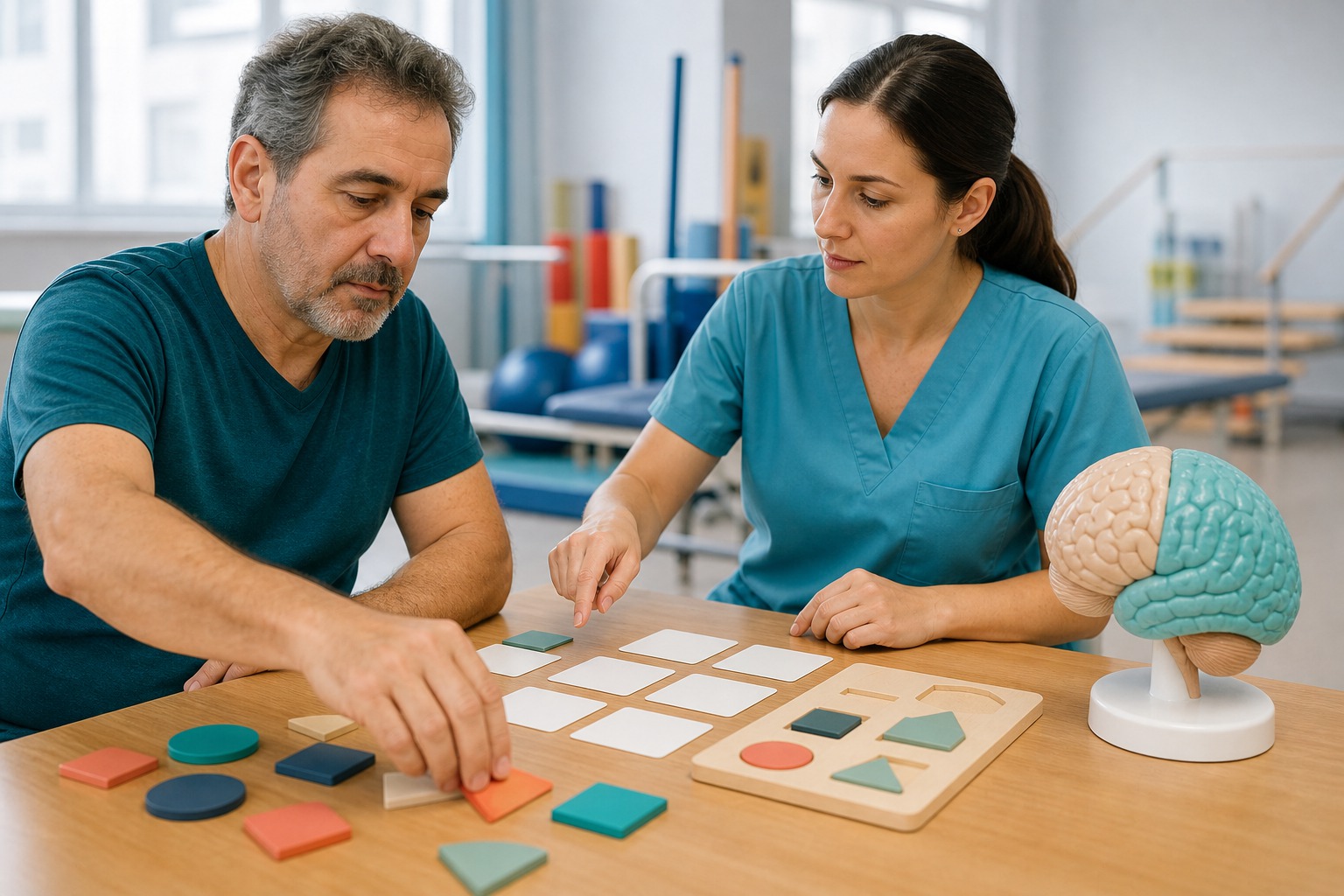
Right Hemisphere
The right hemisphere is not just "the creative part" of the brain; it also supports spatial attention, global perception, nonverbal communication, and body awareness. It discusses the effects of impairment and what can be trained.
4 min read
Working memory and dual task
The article discusses the challenges of multitasking after a stroke, explaining how competing tasks can strain the same cognitive resources and highlighting strategies to train this ability without overwhelming the individual.
3 min read
Neuroplasticity
The brain changes with practice, rest, and experience, highlighting the importance of consistency in learning and growth.
2 min read
Working memory
Keeping information in mind while doing something: reading, calculating, conversing, following steps, or solving a daily task.
3 min read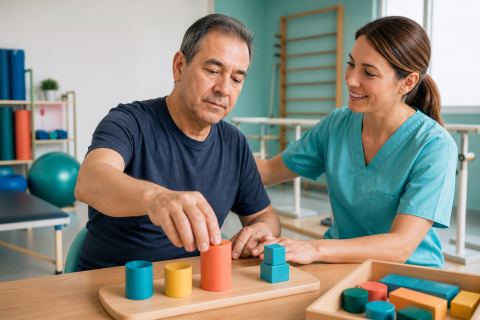
Automation and Relearning
The article discusses why a task can be successfully completed yet still demand significant mental effort, explaining the process of re-automating a function and the phases typically involved in that relearning.
3 min read
Maintaining Attention
This article explores why concentration can be exhausting, why our attention varies from day to day, and how to train our focus without turning it into a source of stress.
2 min read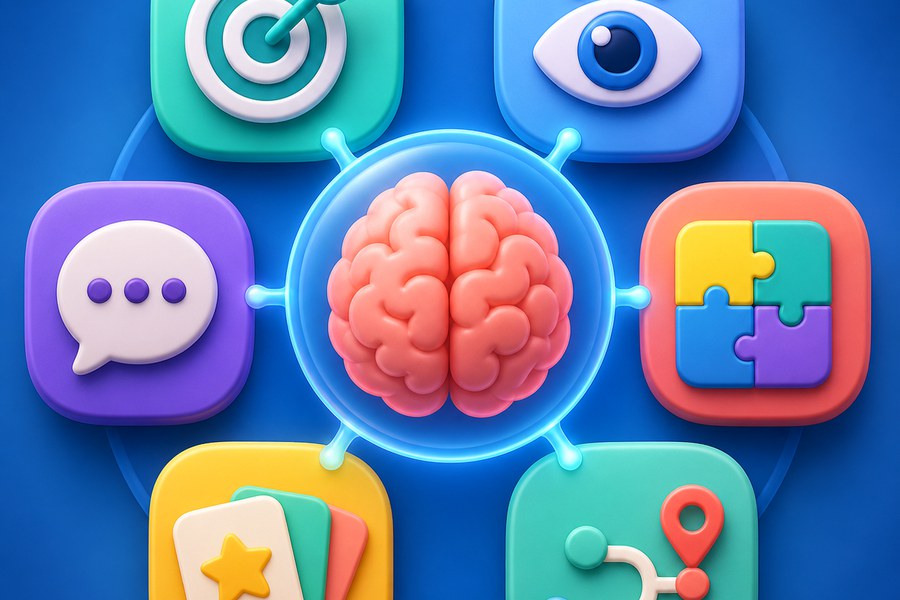
What are cognitive functions
Attention, memory, language, planning, and speed: a guide to understanding what is trained in a cognitive task.
2 min readSpeech Therapy 5

What is Aphasia?
What aphasia is, its most common causes and forms, how it affects daily life beyond words, what a speech therapist actually does, and practical tips for communicating with someone who has it.
6 min read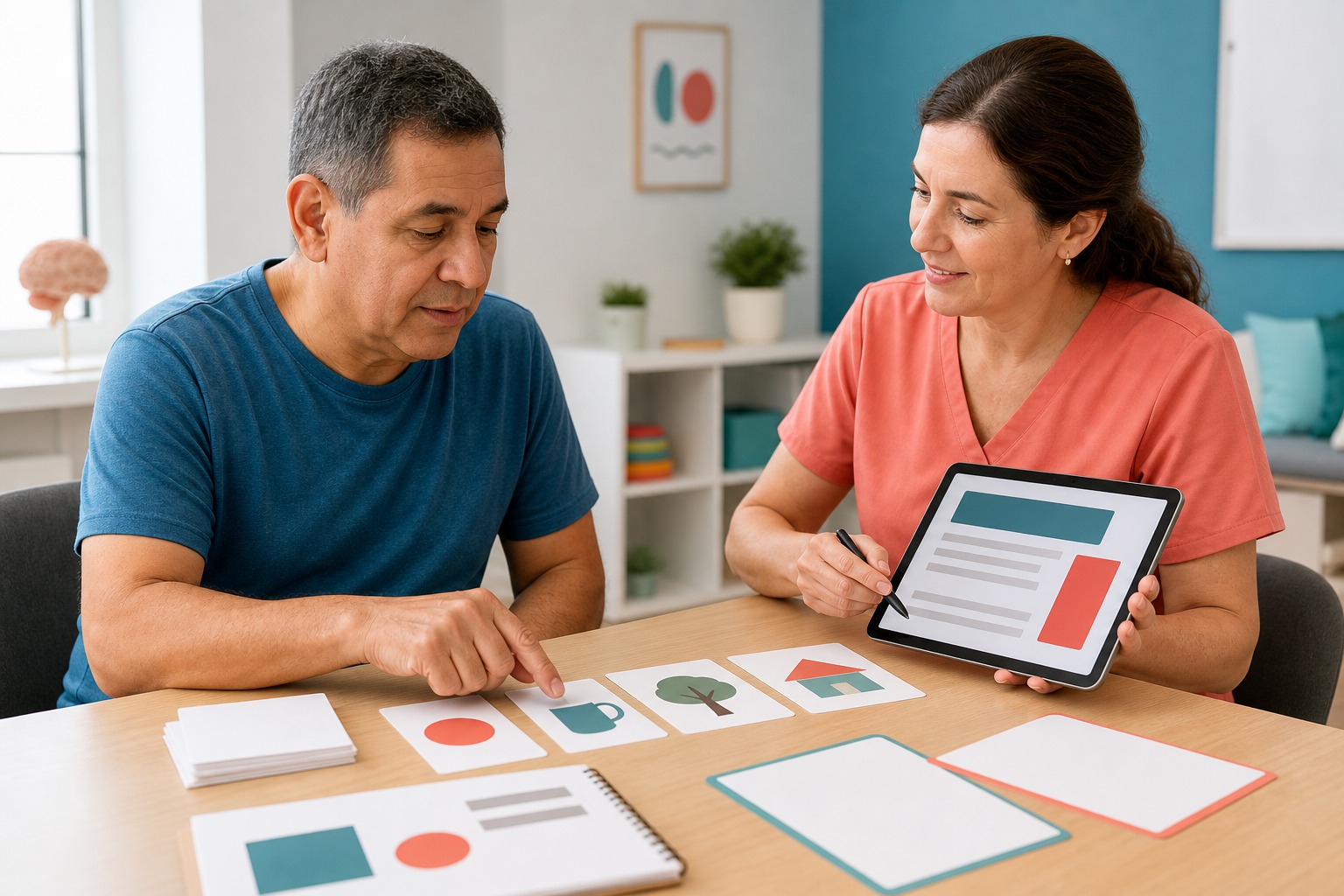
Learning to Read
A practical guide for regaining reading skills step by step, focusing on visual attention, comprehension, pacing, fatigue, and related exercises.
5 min read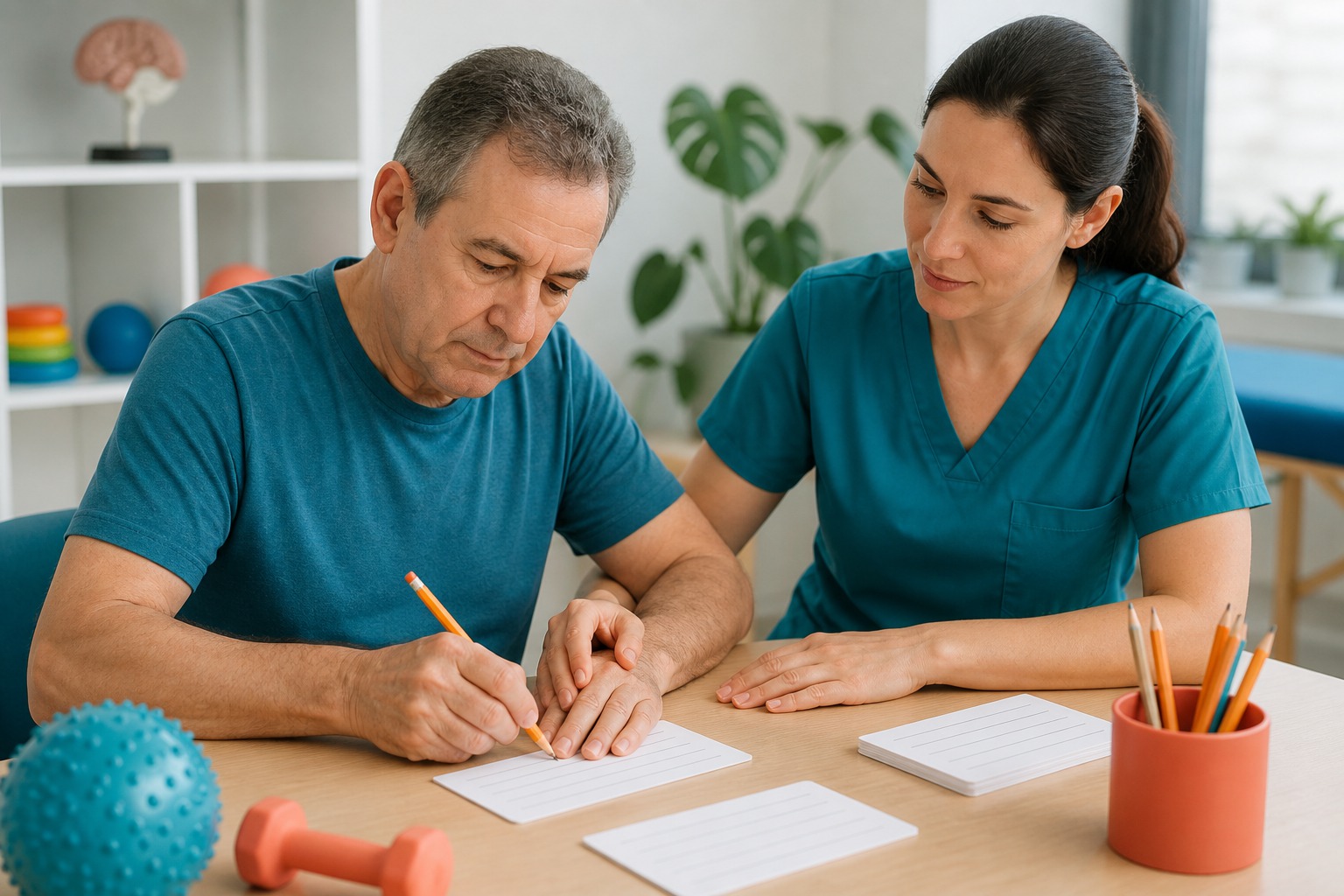
Learning to Write
A simple guide to rewriting with more calm and less pressure: focusing on the idea, the words, the sentences, the revision process, and how to view mistakes without self-punishment.
5 min read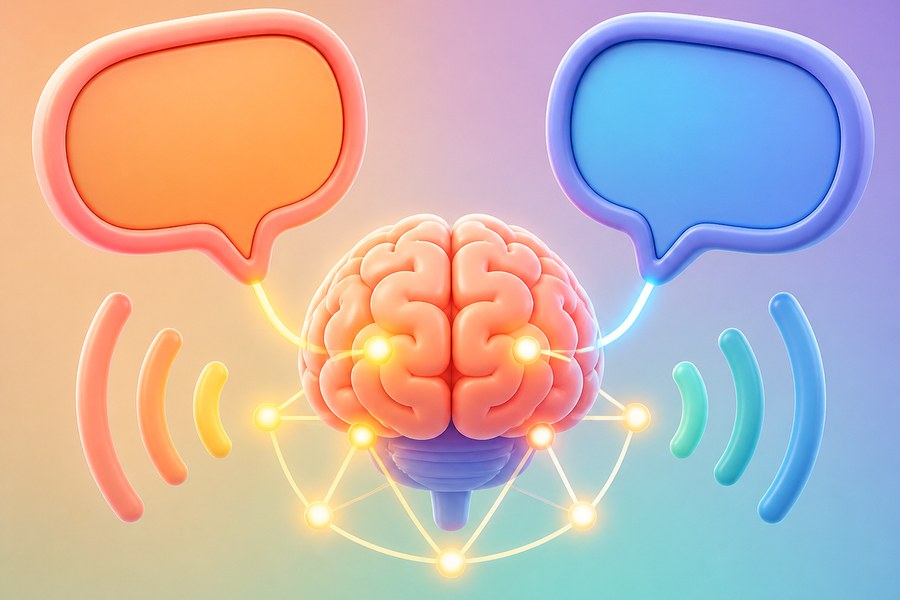
Communication and Language
Speaking, understanding, reading, and writing are all interconnected skills that work together to communicate ideas clearly and engage in daily life.
2 min read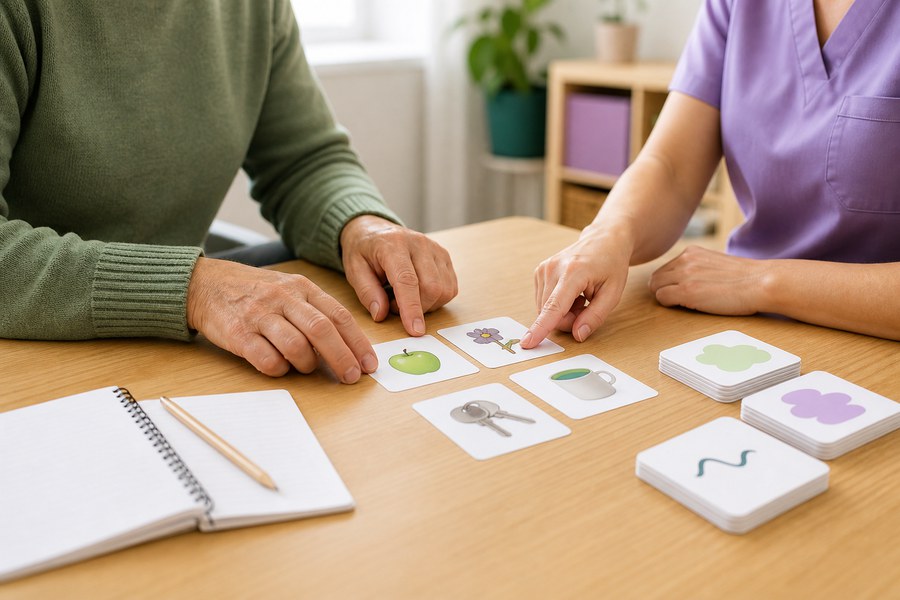
What is Anomia?
Difficulty finding the right word despite knowing exactly what you mean — how it differs from aphasia and the everyday "tip of the tongue", why it happens, and strategies that help in daily life.
4 min readProfessionals 4

Neuropsychology and Cognitive Therapy
This article discusses the methods used to study and train cognitive abilities such as attention, memory, language, executive functions, and processing speed. It highlights various techniques and approaches that enhance these skills.
3 min read
What Speech Therapy Does
Speech therapy addresses issues related to language, voice, communication, and swallowing, which are essential components of daily life. It focuses on helping individuals improve their skills in these areas to enhance their overall quality of life.
3 min read
Occupational Therapy
Occupational therapy bridges physical, cognitive, and sensory abilities with real-life daily activities. It focuses on enhancing a person's overall functioning and independence.
3 min read
Physiotherapy
The article discusses the role of physiotherapy, its benefits, and its connection to functional and cognitive training. It highlights when physiotherapy can be beneficial in improving physical health and overall well-being.
3 min readCognitive Stimulation 2

What is cognitive stimulation?
Structured brain exercise: what cognitive stimulation is, who it can help, which functions it trains, and concrete Reactiva+ challenges for each one.
3 min read
Training without Overloading
Cognitive stimulation is most effective when the difficulty level is appropriate, the sessions are manageable, and mistakes are seen as valuable information.
3 min read