 Reactiva
Working memory is the ability to keep information active for a few seconds while we use it. It’s not just about remembering. It’s about remembering while we think, decide, or perform another task.
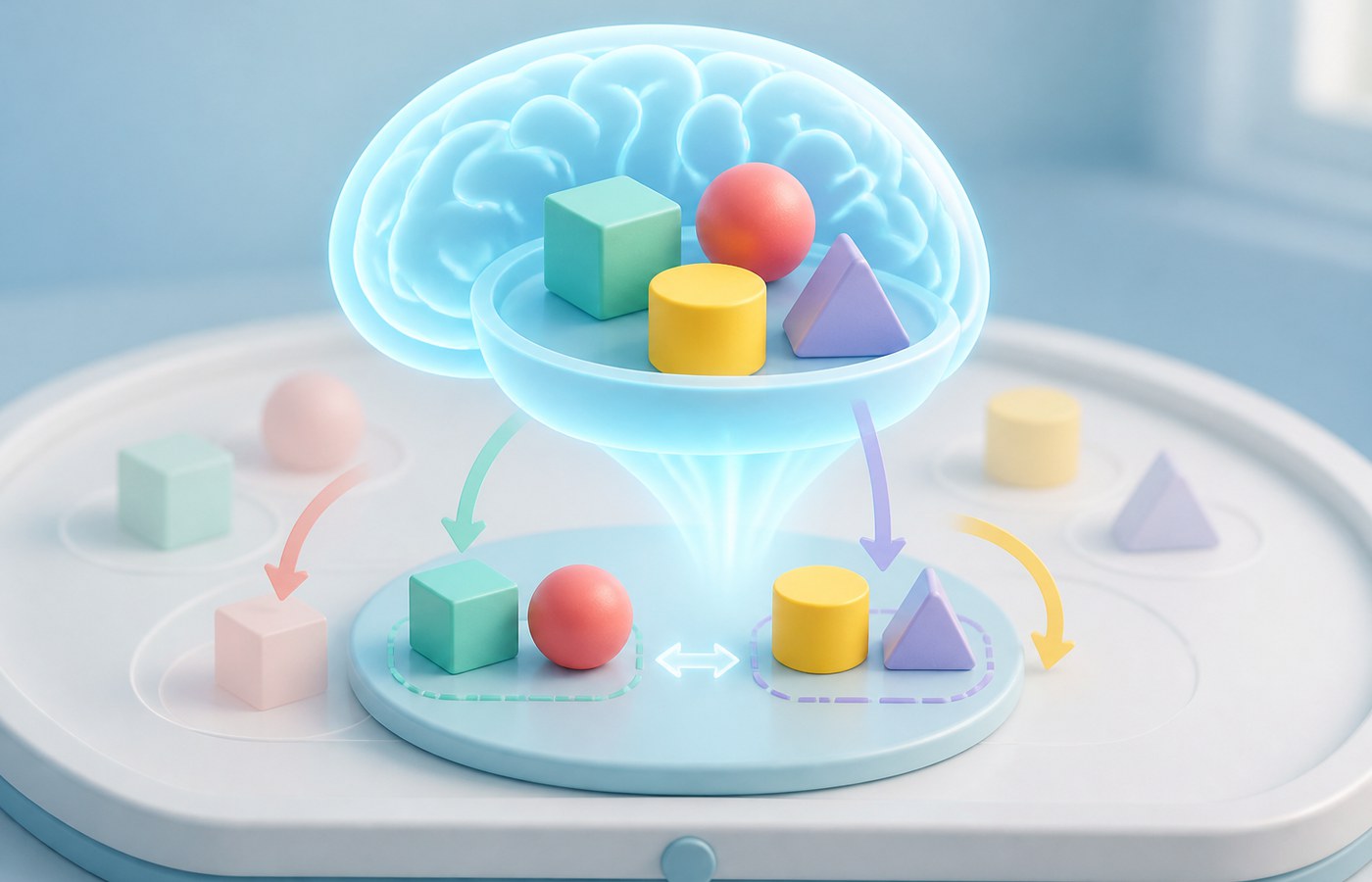
We use it when reading a sentence, following a multi-step instruction, doing mental calculations, or searching for something without losing track of what we are looking for.
A Small Mental Table
You can think of it as a small table where we temporarily place what we need to act. If we put too many things on it, some will fall off.
This doesn’t indicate a lack of intelligence or willpower. Sometimes it means the task requires holding too much information at once.
A simple idea: often it’s not the knowledge that fails, but the ability to hold several pieces of information at the same time.
How It Shows Up in Daily Life
It can be noticed when rereading the beginning of a sentence, forgetting the second step of an instruction, losing track in a conversation, or making mistakes when copying a number.
It also appears when there is noise, haste, fatigue, stress, pain, or too many stimuli around. Working memory doesn’t function in isolation: it relies heavily on attention and overall state.
How to Train It
Training it does not mean doing increasingly difficult tasks until exhausted. It involves finding an appropriate level of difficulty: not so easy that it poses no challenge, and not so difficult that it leads to blockage.
It can be worked on with short sequences, visual patterns, simple mental calculations, chained instructions, or comprehension exercises. The difficulty should gradually increase and be able to decrease when fatigue sets in.
Supporting Strategies
- Reduce steps: Break a long instruction into small parts.
- Write it down: Using a short list is not cheating: it reduces cognitive load.
- Repeat: Saying out loud what you are going to do helps maintain focus.
- Pause: Taking breaks can prevent blockage and frustration.
Summary
Working memory allows us to hold information while we use it. It is essential for reading, conversing, calculating, planning, and problem-solving.
Its capacity is limited. Therefore, it is advisable to train with progression, observe fatigue, and adjust the difficulty to the person's current state.
What You Can Train in Reactiva+
Challenges from the catalog that engage working memory:
- Reverse Sequence: retain a series and return it backwards: the classic working memory task.
- Direct Sequence: the same exercise without manipulation, for a gentler start.
- Dual Task: hold information while attending to something else at the same time.
- N-Back Cards: compare with what came out a few steps ago, continuously updating.
- Chain Calculation: keep the result in mind while the next operation is presented.
- Follow Spatial Instructions: retain several steps and execute them in order.
Working memory is the ability to hold information in your head for a few seconds while using it. It is not just remembering: it is remembering while thinking or doing something else.
We use it when reading a sentence, following a multi-step instruction, or doing mental math.
A small mental table
You can imagine it as a small table where we put what we need for a moment. If we put too many things, some fall off.
This is not a lack of intelligence. Sometimes the task simply requires holding too much information at once.
How it shows
When rereading the beginning of a sentence, forgetting the second step of an instruction, or losing track of a conversation. It gets worse with noise, hurry, or tiredness.
How to train it
It is not about doing harder tasks until you are exhausted. It is about finding the right level: not too easy that it is boring, and not too hard that it blocks you.
Tricks that help
- Break a long instruction into parts.
- Write down a short list: it is not cheating, it reduces load.
- Say out loud what you are going to do.
- Rest on time.
What you can train in Reactiva+
- Reverse Sequence: hold a series and say it backwards.
- Dual Task: hold information while attending to something else.
- Chain Calculation: keep the result in your head.
This content is educational and does not replace assessment, diagnosis or supervision by a healthcare professional.