 Reactiva
You've probably been told at some point that the brain "doesn't know how" to do several things at the same time — that it's really just jumping very quickly from one task to another. For years, science thought something similar. A recent study, published in the Journal of Cognitive Neuroscience, adds some important nuance to that idea.
What the researchers found
A team at Georgetown University (United States) asked a group of volunteers to practice thousands of visual sorting exercises over several weeks, while researchers used MRI scans and EEGs to see what was happening inside their brains.
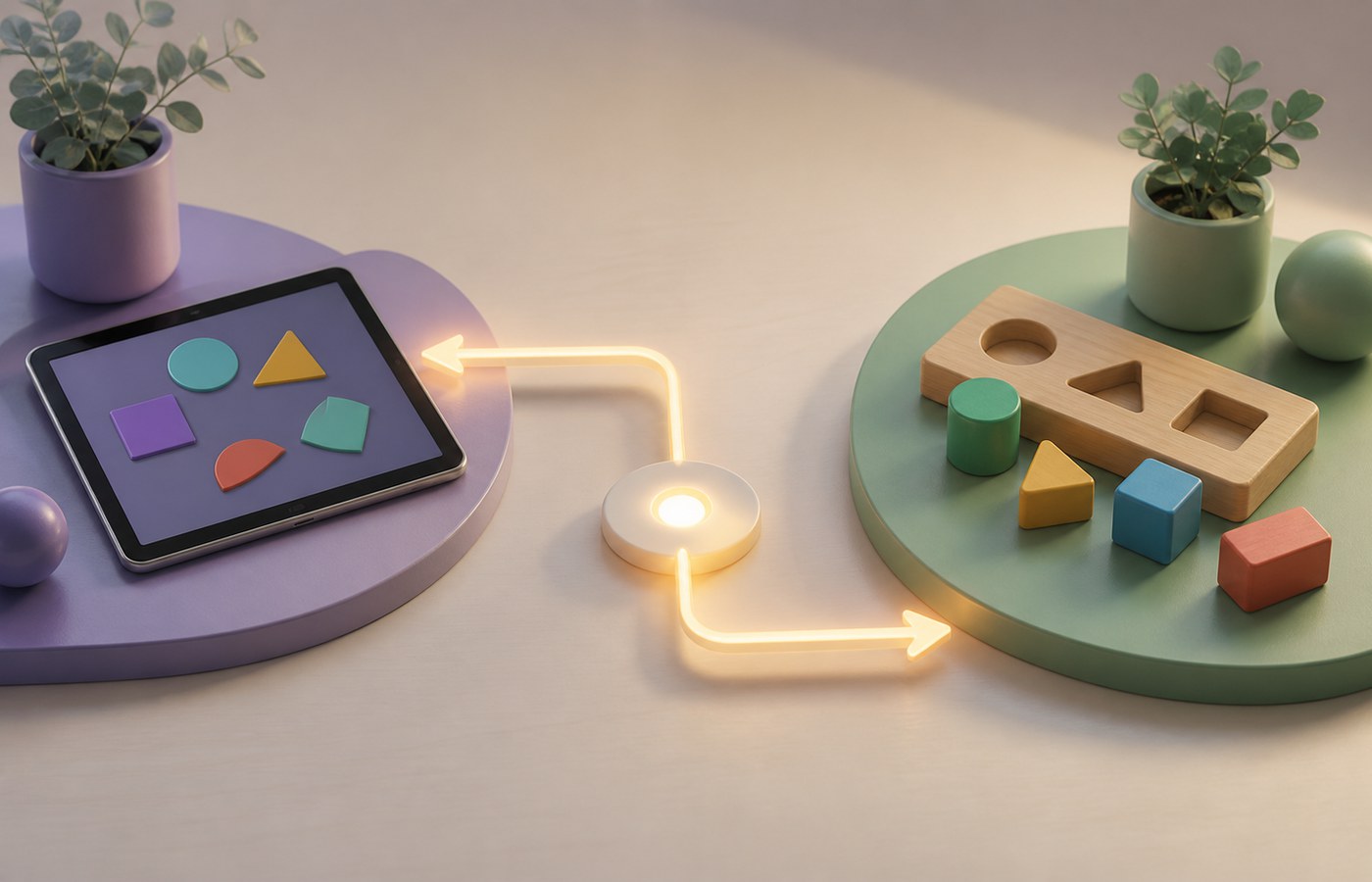
At first, the task demanded a lot of effort from the prefrontal cortex, the area in charge of planning and decision-making. But with repeated practice, the brain gradually shifted part of that work to another area, the temporal lobe, which specializes in recognizing familiar patterns and objects.
Why this matters
That "handover" is the key. When a task stops needing so much conscious attention and becomes almost automatic, it frees up mental resources to attend to something else at the same time. It's not that the brain truly does two complex things in parallel from the very start — it's that, with enough practice, one of them becomes so automatic that it barely "counts" as a second task anymore.
The researchers themselves compare it to what happens with a highly experienced radiologist: they can spot a suspicious shadow on an X-ray almost at a glance, without having to reason step by step, because years of practice have automated that recognition.
What the study doesn't say
This is a study with few participants (eleven), so it's worth not drawing overly broad conclusions from it. It also doesn't say that any combination of tasks can be automated equally well, nor that multitasking is always a good idea: two tasks that compete for the same kind of attention (like reading and following a separate conversation) remain hard to do well at the same time, whether or not they've been practiced.
What you can train in Reactiva+
Several challenges in the catalog work on exactly this idea: making part of a task automatic so you can attend to something else at the same time.
- Dual Task: designed specifically to practice holding two things in mind at once.
- Rule Switching: trains switching from one rule to another without losing track — the basis of task switching.
- Crossed Responses: forces you to attend to more than one stimulus before responding.
- Color Calculation: combines a numerical task with an attention task at the same time.
- Correct Color: a classic for training attention control when competing information is involved.
Many people believe that the brain cannot do two things at the same time. A recent study says this is not entirely true.
What they discovered
Some scientists had several people practice the same exercise many times over weeks. They looked at their brains with special machines while they practiced.
At first, the exercise used a part of the brain that takes a lot of effort. With practice, the brain started using a different part, one that takes less effort.
Why this matters
When something becomes easy to do (because we have practiced a lot), the brain does not need to think about it as much. This frees up space to pay attention to another thing at the same time.
For example: someone who has been doing the same job for years can recognize something at a glance, without thinking too much, because they have practiced it many times.
What this does not mean
It does not mean that you can do everything at once without a problem. Two difficult things that have not been practiced before are still hard to do together.
What you can train in Reactiva+
These challenges help practice just this:
- Dual Task: to practice keeping two things in mind at once.
- Rule Switching: to practice switching from one thing to another without getting lost.
- Cross Responses: to practice paying attention to more than one thing before responding.
- Color Calculation: to practice numbers and attention at the same time.
- Correct Color: to practice controlling attention.
Source: National Geographic España
This content is educational and does not replace assessment, diagnosis or supervision by a healthcare professional.