 Reactiva
The left hemisphere is often closely associated with language, reading, writing, calculation, and the sequential organization of information. Therefore, an injury in this area can feel like a disruption of very everyday tasks.
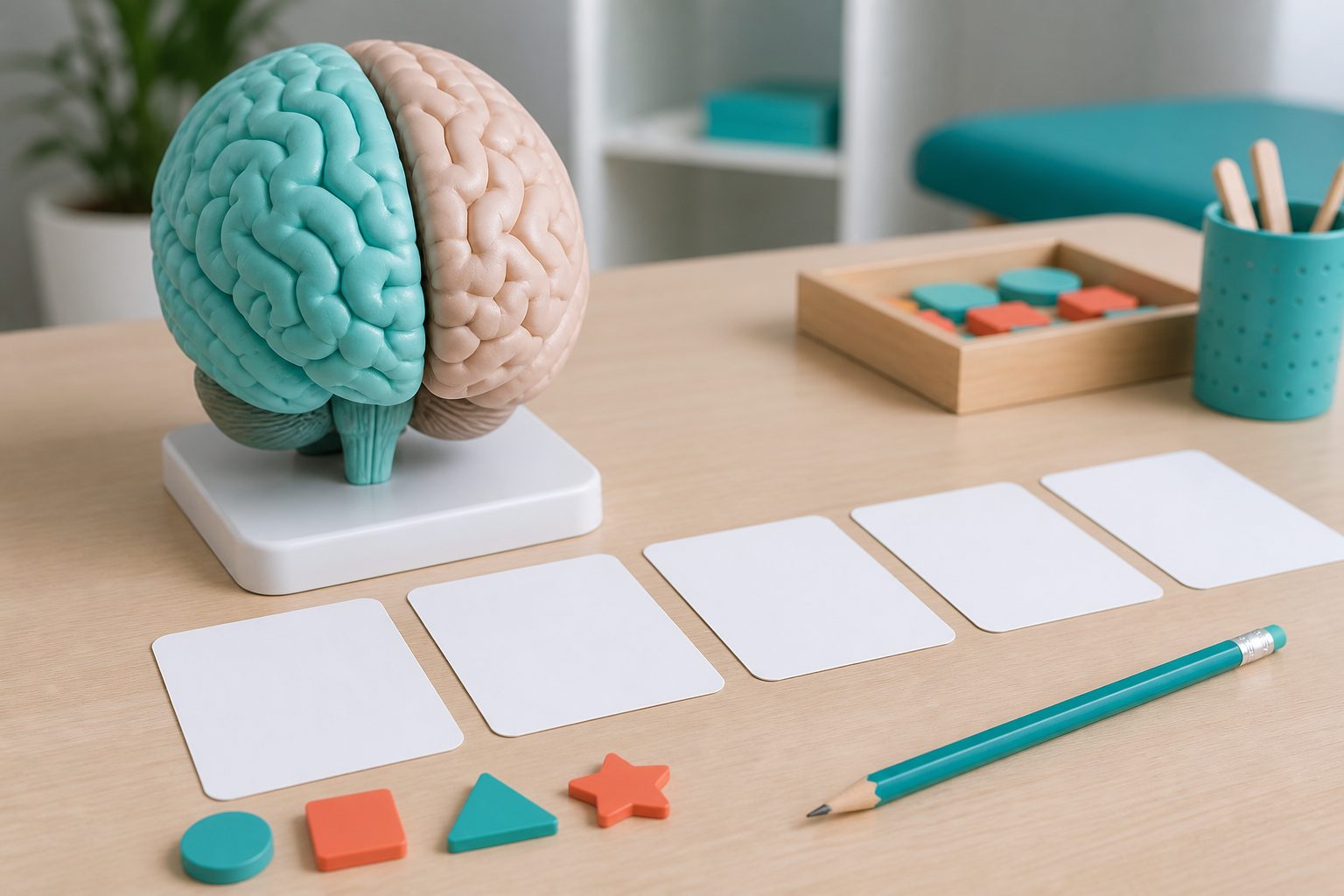
It does not mean that everyone has the same pattern or that everything depends on a single area. The brain works in networks. But understanding the role of the left hemisphere helps to comprehend why some symptoms appear together.
Functions That May Be Affected
- Language: finding words, constructing sentences, reading or writing.
- Calculation: handling numbers, operations, and intermediate steps.
- Sequencing: ordering actions, instructions, or procedures.
- Programming and Logic: following structures, detecting errors, and keeping variables in mind.
When the Automatic Becomes Conscious
Many tasks that used to be automatic now require supervision. Writing a word, reviewing a sentence, or performing a sum may require active attention. This is not laziness or lack of willpower: it is the system trying to rebuild pathways.
The left hemisphere not only processes words. It also supports part of the precision, order, and automation of many complex tasks.
Understanding this allows for training with more patience. It is not about just repeating; it is about regaining precision, speed, and confidence step by step.
The left hemisphere mainly handles language, reading, writing, math, and organizing things. A problem here can affect everyday tasks.
Not everyone has the same pattern, and the brain works together, not in separate parts. But knowing the role of this hemisphere helps understand why some symptoms occur together.
What can be affected
- Language: finding words, making sentences, reading or writing.
- Math: handling numbers and steps.
- Order: following instructions or procedures step by step.
When the automatic stops being automatic
Tasks that used to be easy —writing a word, doing a sum— may now need a lot of attention. It is not laziness: it is the brain rebuilding pathways.
Key idea
Understanding this helps train with more patience: it is not just about repeating, but about regaining accuracy and confidence little by little.
This content is educational and does not replace assessment, diagnosis or supervision by a healthcare professional.