 Reactiva
TITLE: Physiotherapy
BODY:
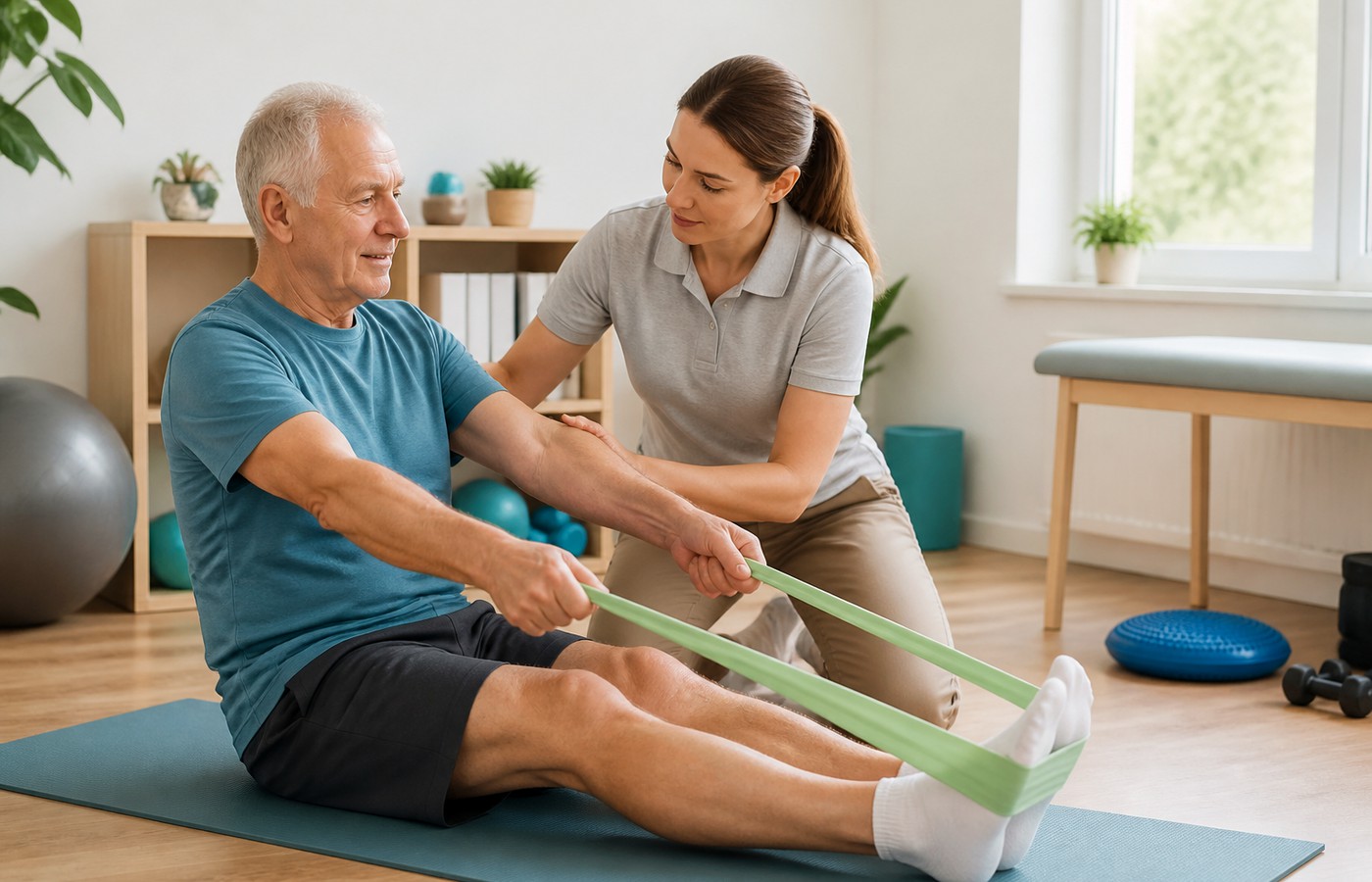
Physiotherapy helps to recover, maintain, or improve movement, strength, balance, and body confidence. It is not limited to physical exercises; it also supports how a person reuses their body in real activities.
What is Physiotherapy
Physiotherapy is a healthcare discipline focused on movement, physical function, pain, posture, gait, balance, and body autonomy.
It can be present in very different processes: recovery after an injury, loss of strength, balance issues, persistent pain, difficulty walking, stiffness, physical fatigue, or the need to return to a daily activity more safely.
Its goal is not just for a person to move more. The goal is for them to move better, with less risk, more control, and greater confidence.
What Can Be Trained
A physiotherapist can work on strength, mobility, coordination, balance, body awareness, gait, posture, endurance, and tolerance to effort.
They can also help to dose activity: when to progress, when to rest, how to avoid overexertion, and how to adapt an exercise to the person's actual state of the day.
In many individuals, movement does not depend solely on muscles. Attention, body perception, gesture planning, and emotional security when moving are also involved.
How It Affects Daily Life
Physiotherapy can influence specific tasks such as getting up from a chair, climbing stairs, walking down the street, turning around, showering, dressing, carrying a bag, or maintaining balance in a noisy and busy environment.
Sometimes improvement does not manifest as a spectacular change. It may appear as less fear, less fatigue, more stability, better control of pace, or a greater ability to repeat an activity without becoming exhausted.
Relationship with Reactiva
Reactiva does not replace physiotherapy, but it can complement functional work when training attention, reaction times, inhibitory control, sequences, spatial orientation, or following instructions.
For example, a person working on balance or gait may also benefit from cognitive tasks that train waiting, attention focus, response speed, and simple planning.
The most interesting connection appears when cognitive training helps to prepare for real tasks: moving with more attention, following steps, avoiding impulsivity, and detecting fatigue before overexertion.
What Reactiva Can Contribute
Reactiva can serve as support for gradually practicing cognitive abilities, recording progress, and connecting training with functional goals.
It does not replace the professional. It can help prepare sessions, observe patterns, and offer exercises adapted to the person's pace.
- Physiotherapy can help when: there is difficulty walking, loss of strength, pain, stiffness, insecurity, falls, physical fatigue, or balance issues.
- It is advisable to adapt when: exercise significantly increases pain, intense exhaustion appears, there is dizziness, blockage, or safety while moving worsens.
- Key idea: moving better is not just about strength: it is also about control, attention, rhythm, safety, and confidence.
Challenges in the Catalog
These Reactiva+ challenges work on processes similar to what is described above:
- Tap When It Appears: reaction time with a single tap.
- Follow the Light: visual tracking, useful if there is fatigue or motor difficulty.
- Reactive Body: quick response with impulse control.
- Follow Spatial Instructions: up, down, left: orientation with language.
- Spatial Rotation: mentally rotate a figure and recognize it.
Important Notice
This article is for informational and educational purposes. It does not replace an assessment, diagnosis, or treatment by a healthcare professional. If there are new symptoms, sudden worsening, intense pain, swallowing problems, falls, significant changes in behavior, or clinical doubts, it is advisable to consult the referring professional.
Physiotherapy helps to recover movement, strength, balance, and body confidence. It is not just exercise: it also helps to use the body again in real life.
What it can train
Strength, mobility, balance, walking, and endurance. It also helps to manage activity: when to advance and when to rest.
How it shows in daily life
You notice it when getting up from a chair, climbing stairs, or walking down the street. Improvement is not always spectacular: it can be less fear or more stability.
Relationship with Reactiva+
Reactiva+ does not replace physiotherapy, but it can complement the work by training attention, reaction times, and following instructions — useful, for example, for those working on balance or walking.
When it can help
- When there is difficulty walking, loss of strength, or balance problems.
- It does not replace the physiotherapist.
What you can train in Reactiva+
- Touch when it appears: reaction time.
- Follow the light: visual tracking.
- Spatial rotation: mentally rotating a shape.
Note
This article is informative. It does not replace a professional assessment.
This content is educational and does not replace assessment, diagnosis or supervision by a healthcare professional.