 Reactiva
TITLE: Occupational Therapy
BODY:
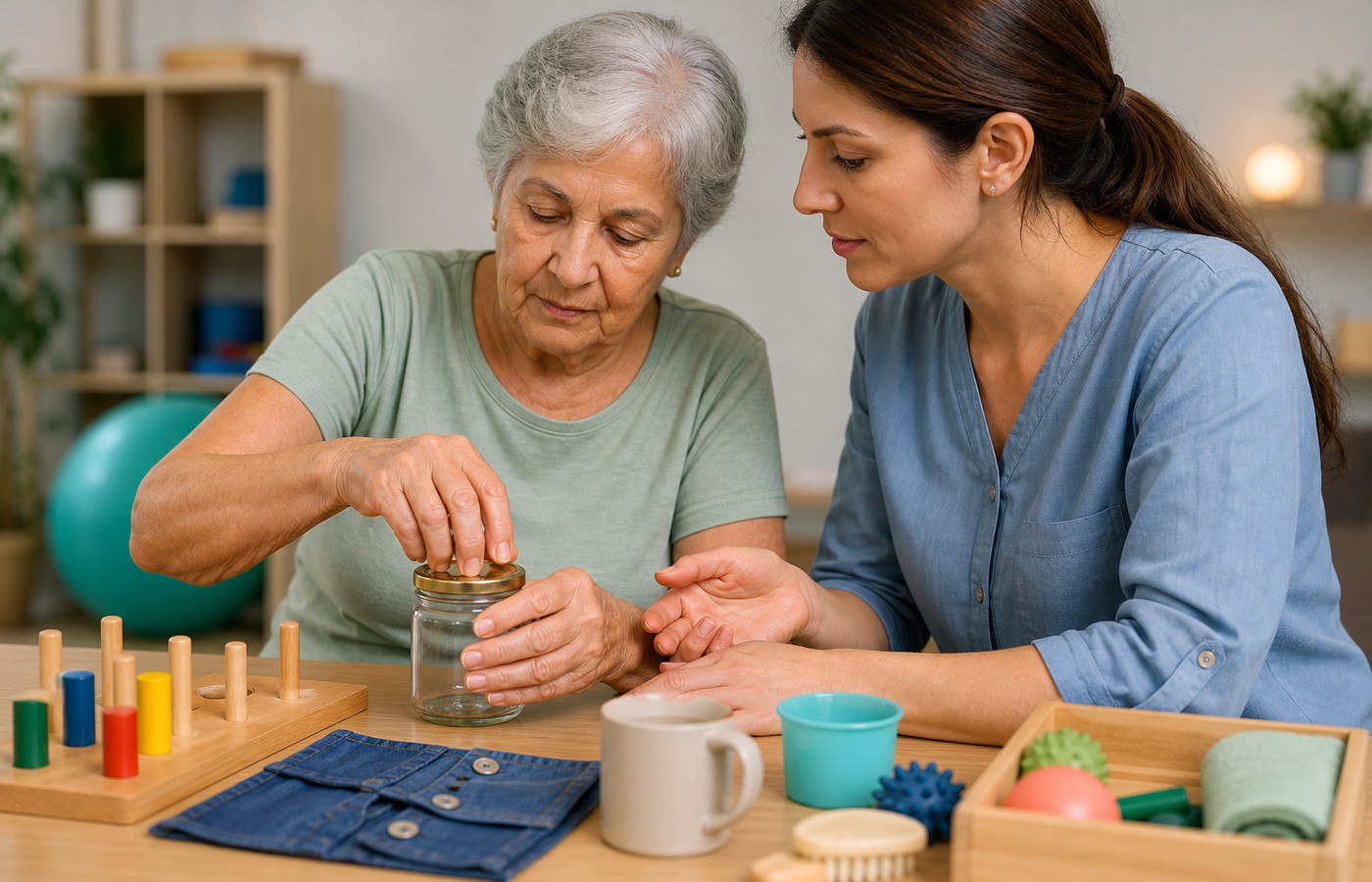
Occupational therapy focuses on what a person needs or wants to do in their daily life. It does not work on an isolated ability: it observes how movement, attention, memory, perception, environment, objects, and habits combine.
What is occupational therapy
Occupational therapy helps improve autonomy in meaningful activities: personal hygiene, dressing, eating, writing, using a mobile phone, organizing the home, work, study, leisure, or social participation.
Its central question is not just what ability is lacking, but what specific activity the person wants to recover, adapt, or facilitate.
What can be trained
It can work on manual dexterity, coordination, task planning, tool use, environmental adaptation, effort economy, routines, safety, visual perception, spatial attention, and strategies for completing activities step by step.
It can also recommend technical aids or practical changes: rearranging objects, simplifying a routine, using visual supports, reducing steps, or changing the way an activity is performed.
How it shows in daily life
Occupational therapy is noticeable when a person can dress with less help, prepare a simple meal, write a note, handle a tablet, set a table, remember a routine, or participate in an activity they previously avoided.
Often, the goal is not to do it perfectly. It is to make it possible, safe, and with less effort.
Relationship with Reactiva
Reactiva can provide functional cognitive training: sequences, attention, spatial orientation, working memory, visual recognition, decision-making, and impulse control.
The connection with occupational therapy is clear when a game is linked to a real activity. For example, following steps, remembering instructions, finding objects, planning a route, or choosing the right moment to respond.
What Reactiva can contribute
Reactiva can serve as support to practice cognitive abilities gradually, track progress, and connect training with functional goals.
It does not replace the professional. It can help prepare sessions, observe patterns, and offer exercises adapted to the person's pace.
- Occupational therapy can help when: it is difficult to perform daily activities, organize routines, use objects, maintain attention, or complete tasks independently.
- It is advisable to adapt when: the activity is too long, requires too many steps, there is risk, fatigue, frustration, or unnecessary dependence.
- Key idea: autonomy does not depend on a single ability: it depends on the person, the task, and the environment.
Challenges in the catalog
These Reactiva+ challenges work on processes close to what is described above:
- Memory City: a journey through a city associating objects with places.
- Follow Spatial Instructions: chained instructions, step by step.
- Visual Commands: execute a command without losing order.
- Word Search: sustained visual search.
- Numbers in Context: prices, schedules, and quantities from daily life.
- Final Hour: planning with time, such as organizing a routine.
Important notice
This article is for informational and educational purposes. It does not replace an assessment, diagnosis, or treatment by a healthcare professional. If there are new symptoms, sudden worsening, intense pain, swallowing problems, falls, significant behavioral changes, or clinical doubts, it is advisable to consult the referring professional.
Occupational therapy focuses on what a person needs to do every day: bathing, dressing, cooking, writing, using a phone, or joining activities.
What it can train
Manual skills, task planning, using tools, and strategies to complete activities step by step. It can also suggest practical changes, like simplifying a routine.
How it shows in daily life
It shows when someone can dress with less help, prepare a simple meal, or remember a routine. The goal is not to do it perfectly, but to make it possible and with less effort.
Relationship with Reactiva+
Reactiva+ provides functional cognitive training: following steps, remembering instructions, or planning a route.
When it can help
- When it is hard to do daily activities or organize routines.
- It does not replace the professional: it helps to practice and observe patterns.
What you can train in Reactiva+
- Memory City: associate objects with places.
- Visual Orders: follow an instruction without losing order.
- Final Hour: plan with times, like a routine.
Note
This article is for information. It does not replace a professional assessment.
This content is educational and does not replace assessment, diagnosis or supervision by a healthcare professional.