 Reactiva
Cognitive stimulation involves the structured exercise of functions such as memory, attention, language, or executive functions (planning, organization, mental flexibility), with the aim of keeping them active or helping to recover them after a neurological injury or illness.
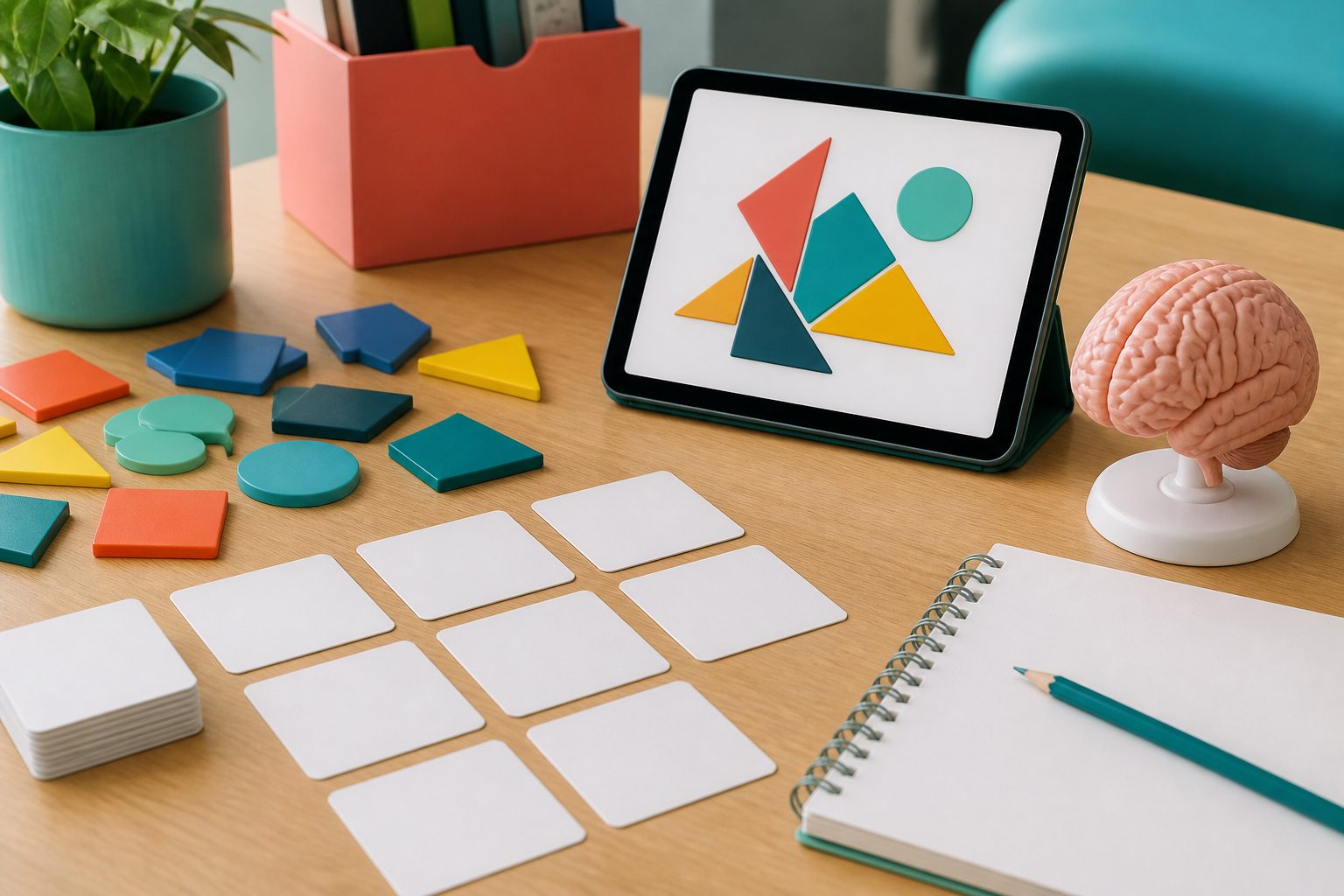
It isn't just "doing puzzles". Each task is chosen, graded, and adjusted with a specific goal behind it, not at random.
Who can it help?
It is used for both individuals with cognitive impairment (for example, associated with aging or neurodegenerative diseases) and in rehabilitation processes following acquired brain damage (stroke, traumatic brain injury) — always adapting the difficulty and type of exercise to each person's profile.
It also makes sense as prevention, with no injury involved at all: keeping the brain active and varied is useful at any age.
Which functions can be trained
- Attention: selecting what's relevant and ignoring the rest.
- Memory: registering, retaining, and retrieving information.
- Language: finding words, understanding, and building sentences.
- Executive functions: planning, organizing, inhibiting, and switching strategy.
- Processing speed: responding nimbly to information.
An exercise rarely trains a single function in isolation: several are almost always mixed together, just as in any real everyday task.
How we work on it in Reactiva+
Reactiva+ translates this principle into short challenges and games organized by cognitive domain, designed for consistent practice — often the key isn't a single "miracle" exercise, but regularity over time, just as with physical training.
Cognitive stimulation isn't about "winning" a game. It's about that effort translating into more independence in real life.
Difficulty can go up or down depending on how each person responds, so the challenge stays reachable while still requiring real effort.
What you can train in Reactiva+
One example challenge for each function described above:
- Positions memory: visuospatial memory.
- Correct color: selective attention, with interference thrown in.
- Verbal relationships: language and verbal reasoning.
- Rule switching: executive functions, flexibility and rule changes.
- Quick symbols: processing speed.
It is exercising the brain in an organized way: memory, attention, language, or functions like planning and organizing. The goal is to keep them active or help recover them.
It is not just doing puzzles. Each exercise is chosen for a reason.
Who does it help?
- People with memory loss, due to age or illness.
- People recovering from a stroke or a head injury.
- It also helps prevent problems, even if there are none.
What is trained
- Attention: focusing on what is important.
- Memory: recalling information.
- Language: finding words and understanding sentences.
- Executive functions: organizing and planning.
- Speed: responding quickly.
How it is done in Reactiva+
With short games and challenges, organized by what they work on. The important thing is not a "miracle" exercise, but to practice consistently, like physical exercise.
The difficulty increases or decreases based on how each person is doing, so the challenge is possible but demanding.
Note
This text is for informational purposes only.
This content is educational and does not replace assessment, diagnosis or supervision by a healthcare professional.