 Reactiva
Stimulating cognition does not mean doing random exercises. It means proposing tasks that activate processes such as attention, memory, language, perception, or planning.
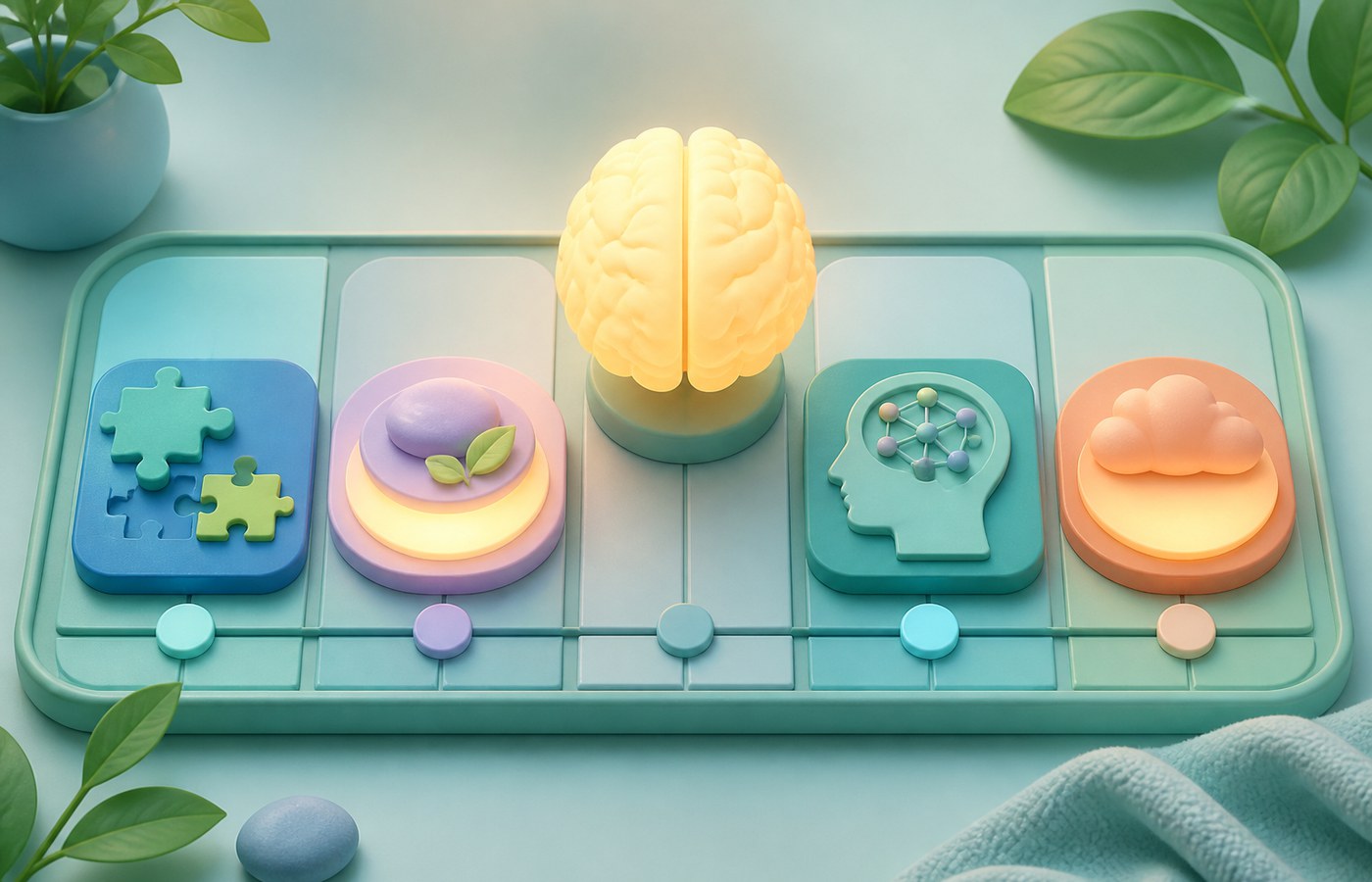
The task must make sense, have a clear objective, and a difficulty level suited to the individual.
Cognitive Load
Every task has a load. It can come from the number of stimuli, the speed, the number of steps, the similarity between options, or the need to remember information.
When the load exceeds what is tolerable, blocking, frustration, repeated errors, or abandonment can occur.
Key idea: training must be adapted to the actual state of the person, not the other way around.
The Dose Matters
A brief session can be sufficient if it is well designed. Consistency is usually more useful than excessive intensity.
The dose can be adjusted by time, number of trials, difficulty, breaks, and variety of games.
Errors Provide Information
Making mistakes does not have to be negative. An error can indicate that the task is too fast, too similar, too long, or too loaded.
What is important is to use that information to adjust the activity, not to create a sense of failure.
Applying it in Reactiva+
Reactiva+ can help to grade difficulty, observe times, and determine when it is appropriate to maintain, increase, or decrease the level.
Cognitive stimulation should feel like a feasible practice, not like a constant exam.
- Objective: Each challenge should train something specific.
- Dose: Better sustainable than excessive.
- Adaptation: Difficulty should be adjustable up and down.
- Calm: Errors are information, not punishment.
What You Can Train in Reactiva+
On days with low energy, it is advisable to reduce the load without stopping training. These require little at a time:
- Tap when it appears: a single tap: the lowest load in the catalog.
- Follow the light: also a single tap, useful if there is fatigue or motor difficulty.
- Direct sequence: short series, stop as soon as the limit is felt.
- Position memory: brief session with adjustable difficulty.
- Correct color: a few minutes and clear results, without accumulating load.
Stimulating the brain is not random exercises. It is giving tasks with a clear goal and a difficulty that fits the person.
Load Matters
Each task has a load: by the number of things, the speed, or what needs to be remembered. When the load is too much, there is blocking or frustration.
Dose Matters More Than Intensity
A short session can be enough if it is well planned. It is better to be consistent than to push too hard at once.
Mistakes Inform
Making a mistake is not negative. A mistake can show that the task is too fast or too long. It helps to adjust, not to feel bad.
How to Apply It
- Each challenge should train something specific.
- Better sustainable than excessive.
- The difficulty should be able to go up and also down.
What You Can Train in Reactiva+
For days with low energy, these ask for little at once:
- Tap When It Appears: with a single tap.
- Follow the Light: useful if there is fatigue.
- Memory of Positions: short and adjustable.
This content is educational and does not replace assessment, diagnosis or supervision by a healthcare professional.