 Reactiva
Neuroplasticity is the nervous system's ability to change with experience. The brain is not a fixed structure: it adapts, reorganizes connections, and learns new patterns.
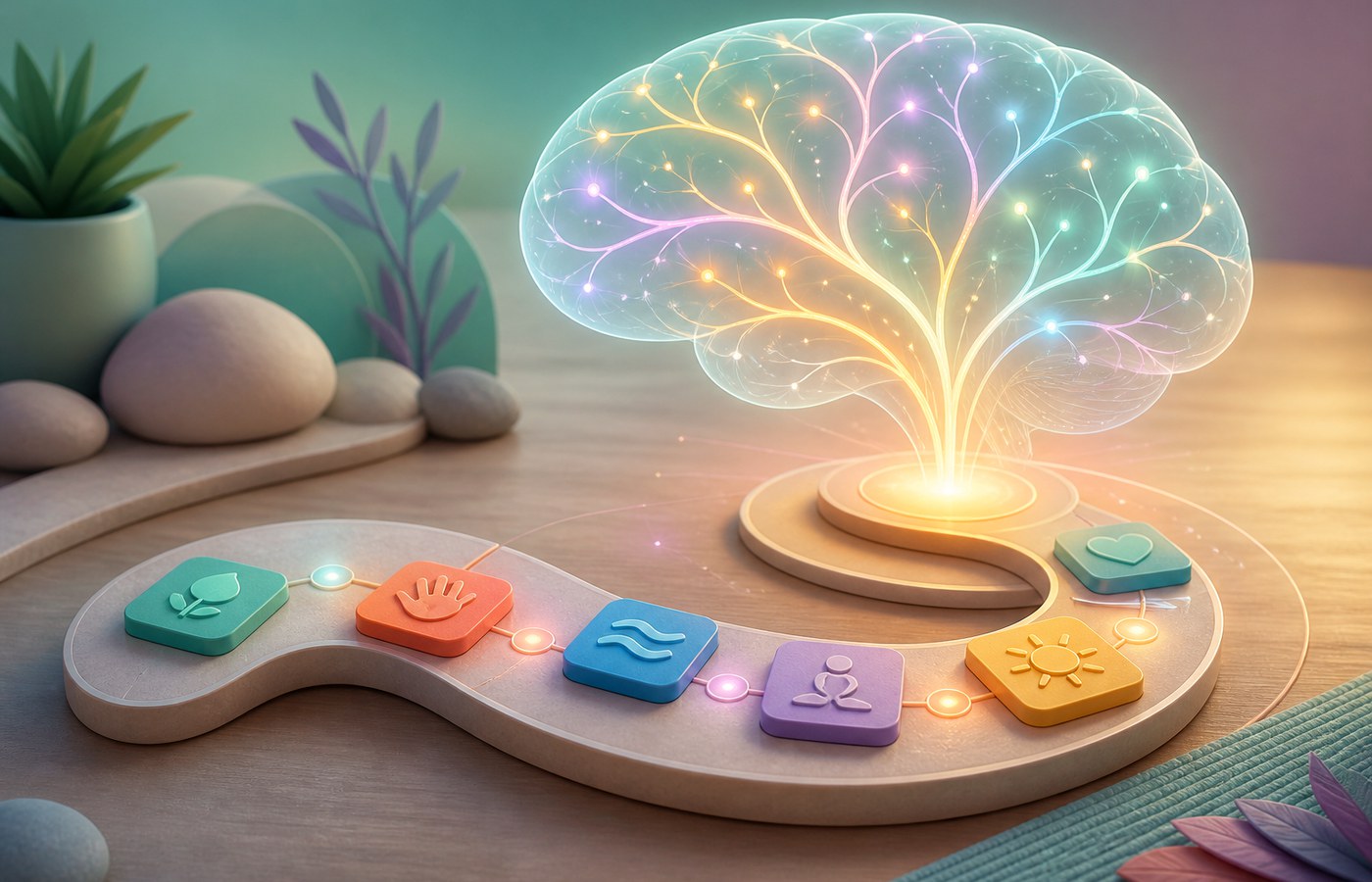
This does not mean that everything changes quickly or automatically. It means that practice, context, repetition, and rest can influence how we learn.
Practice Needs Purpose
Repetition can help, but not all repetition is equally effective. Useful practice has a goal, appropriate difficulty, feedback, and rest.
If a task is too difficult, it can lead to frustration. If it is too easy, it barely requires any adjustments. The most helpful point is usually at an intermediate level of difficulty.
Consistency is often more important than a long and exhausting session. Short, well-adjusted, and repeated over time can be more sustainable.
Errors as Information
Errors should not be seen only as failures. In learning, an error can indicate which part needs adjustment: attention, memory, speed, comprehension, strategy, or fatigue.
This is why it is important to observe not only whether the answer is correct, but also how the response is reached: time, blockages, impulsivity, fatigue, and evolution between sessions.
Rest is Also Part of Learning
Rest is not wasted time. The brain needs breaks to consolidate learning and avoid saturation. In cognitive tasks, training while tired can increase errors and reduce quality.
An adaptive system should know when to increase difficulty, when to maintain it, and when to decrease it. Improvement does not always appear as a straight line.
How to Apply This to Training
- Short Sessions: Better to have short and consistent practice than an excessive session.
- Just Right Difficulty: The challenge should demand effort but not block progress.
- Supportive Feedback: The result is for adjustment, not for judgment.
- Flexible Progression: Adjusting difficulty up and down according to the day is also effective training.
Summary
Neuroplasticity helps us understand why practice can change skills and strategies. But change takes time, context, and moderation.
Training with purpose means combining repetition, rest, appropriate difficulty, and observing progress.
What You Can Train on Reactiva+
There is no specific "neuroplasticity" challenge: what fosters it is well-adjusted and repeated practice over time. These activities work well for that:
- Memory of Positions: a good starting point for daily practice without exhausting yourself.
- The News: changes with each game, so practice does not become automatic.
- Sequence of Symbols: progresses by length: it’s noticeable when to increase and when to stop.
- Correct Color: short and measurable sessions, useful for maintaining consistency.
- Chain Calculation: allows for adjusting demands without changing exercises.
Neuroplasticity is the brain's ability to change with experience. It is not a fixed structure: it adapts and learns new things.
This does not happen automatically or quickly. Practice, repetition, and rest affect how we learn.
Practice needs meaning
Repetition helps, but not all repetition is the same. Useful practice has a goal, the right difficulty, and rest.
If the task is too hard, it can frustrate. If it is too easy, it does not add anything new. The right point is usually in the middle.
Error as information
An error is not just a failure. It can show which part needs adjustment: attention, memory, speed, or tiredness.
Resting is also learning
Rest is not wasted time. The brain needs breaks to fix what it has learned. Training when very tired can worsen the result.
How to apply it
- Short sessions are better than one long session.
- Right difficulty: it should challenge, but not block.
- Adjust the level according to the day.
What you can train in Reactiva+
- Position Memory: a good starting point to practice every day.
- The News: changes in each game.
- Correct Color: short sessions that are easy to measure.
This content is educational and does not replace assessment, diagnosis or supervision by a healthcare professional.