 Reactiva
More Than Just Talking
Language is not just about pronouncing words. It also includes understanding, finding the right word, organizing sentences, reading, writing, and adapting what we say to the context.
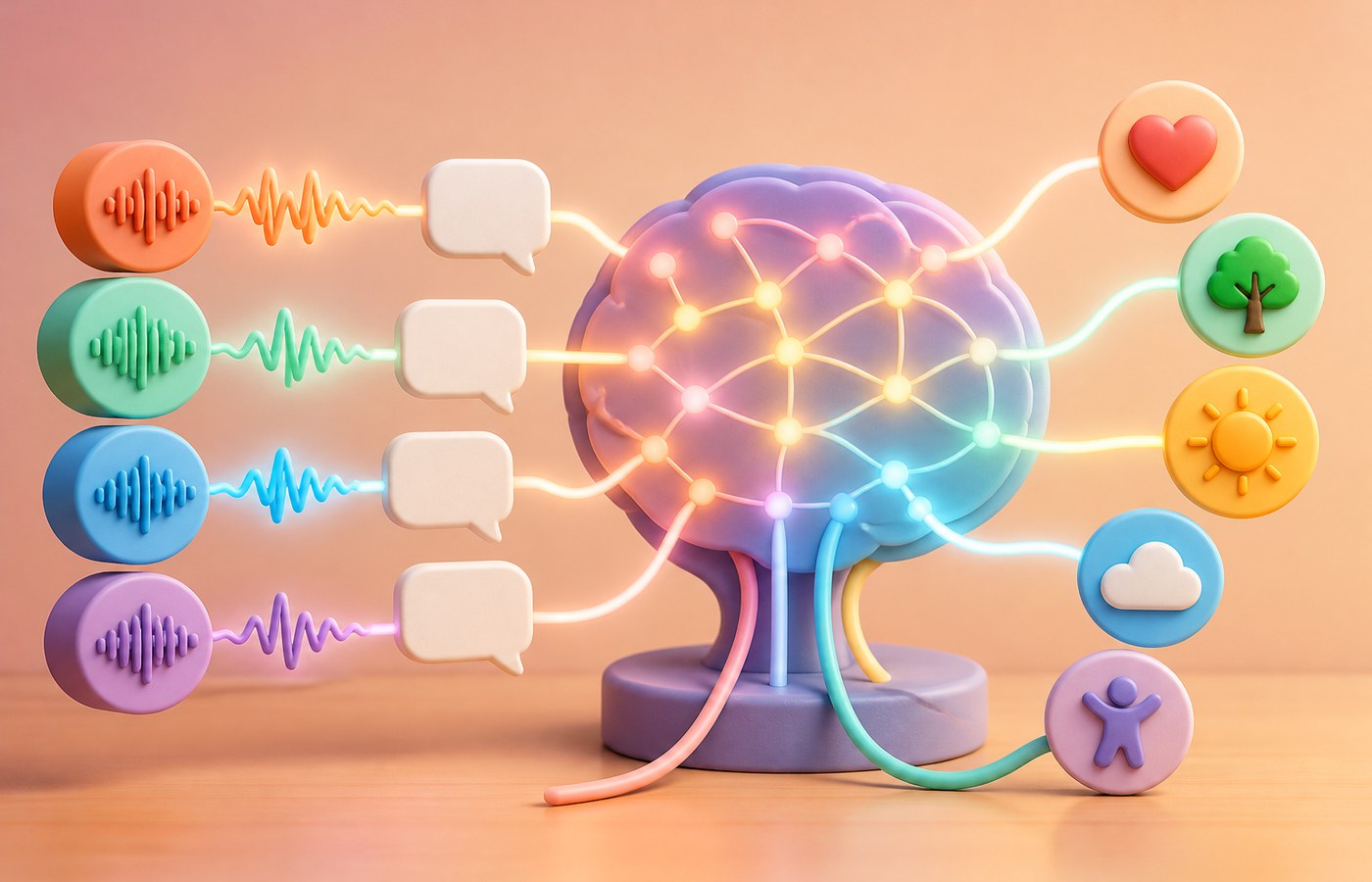
This is why a language difficulty can manifest in many different ways: when speaking, reading, writing, or following a conversation.
Components of Language
We can talk about comprehension, expression, naming, fluency, reading, writing, repetition, and speech. Each component may require different supports.
Attention, working memory, and fatigue also play a role. When a person is tired, they may have more difficulty finding words or keeping track of a conversation.
Key idea: training should be tailored to the person's actual state, not the other way around.
How It Shows Up in Daily Life
It can be noticeable when someone struggles to find a word, writes with errors, reads more slowly, loses track of an explanation, or needs more time to respond.
These difficulties should not be interpreted as a lack of interest. Sometimes the idea is clear, but it is hard to convert it into language.
How to Train It
Training can work from isolated words to phrases, descriptions, functional reading, or brief writing.
It is important to gradually increase the difficulty: first clarity, then speed; first comprehension, then production; first short sentences, then longer texts.
Related Challenges
Reactiva+ can include challenges related to categories, recall, guided description, reading, writing, analogies, and comprehension.
The goal is to practice language functionally, with tasks that can be transferred to real-life situations.
- Comprehend: Understand words, phrases, and instructions.
- Express: Convert ideas into language.
- Read: Decode and understand.
- Write: Plan, produce, and review.
What You Can Train in Reactiva+
Challenges from the catalog for the components of language described in the article:
- Sound and Meaning: recall: retrieve words by category and initial letter.
- Verbal Relationships: semantics: the relationship between concepts.
- Synonyms & Antonyms: lexical precision: choose the exact word.
- Phrase Puzzle: comprehension: reconstructing the sentence requires reading it entirely.
- Hidden Letters: writing: complete the word by writing it yourself.
- Phrase Mosaic: composition: move from the isolated word to a meaningful sentence.
Language is not just saying words. It is also understanding, finding the right word, reading, writing, and adapting what we say.
That is why a language difficulty can show in different ways: when speaking, reading, or writing.
Parts of Language
Understanding, speaking, finding words, reading, writing. Each part may need different support.
Fatigue also affects this: when tired, it is harder to find words or keep up with the conversation.
How It Shows
Not finding a word, writing with mistakes, reading more slowly, or needing more time to respond. It is not a lack of interest: the idea is clear, but it is hard to turn it into words.
How to Train
From the simplest to the most complex: first words, then phrases, then texts. First clarity, then speed.
What You Can Train in Reactiva+
- Sound and Meaning: recover words by category.
- Synonyms & Antonyms: choose the exact word.
- Hidden Letters: complete the word by writing it.
This content is educational and does not replace assessment, diagnosis or supervision by a healthcare professional.