 Reactiva
Working memory is like a mental table: it holds what you need for a few seconds to operate with it. After a stroke, that table can become smaller or fill up more quickly.
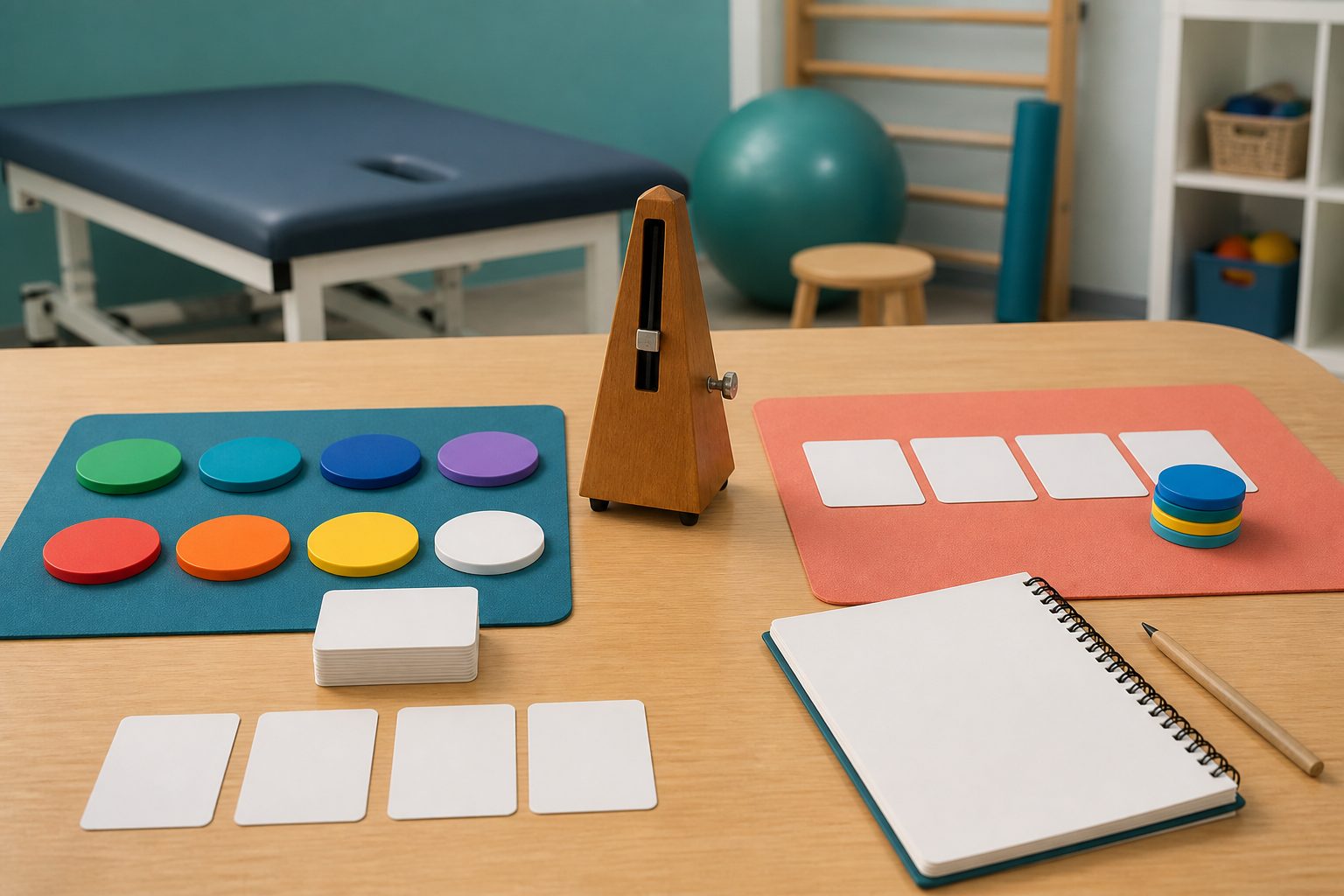
This is noticeable in very normal situations: cooking by following several steps, remembering an instruction while doing something else, doing mental calculations, talking while walking, or writing a long sentence without losing the thread.
What Happens with Dual Task
Dual task demands dividing resources. Before, many actions were automatic; now, walking, talking, writing, or calculating may require conscious attention again. If two tasks compete, one of them suffers.
- Walking and talking: it can increase insecurity or slowness.
- Cooking: the order of steps may fail.
- Writing: letters may be omitted or the idea may be lost.
- Calculating: an intermediate number may be lost or the sign may change.
Train Without Overloading
The key is not to push yourself until you block. It’s about scaling: first one task, then two elements, then more speed, then more distraction, always leaving room to review.
Dual task does not improve just by insisting. It improves when the brain regains automatism and learns to manage load.
Measuring fatigue is also part of the training. If an exercise goes worse at the end, it may not be a failure: it may be revealing the current limit of cognitive endurance.
Working memory is like a small table in the head: it holds what you need to use for a few seconds. After a stroke, that table can get smaller.
You notice it in normal things: cooking step by step, remembering something while doing another thing, calculating in your head, or talking while walking.
What happens with dual task
Before, many actions happened automatically. After, walking, talking, or calculating may need conscious attention again. If you do two things at once, one of them gets worse.
- Walking and talking: more insecurity or slowness.
- Cooking: you can lose the order of the steps.
- Writing: you can skip letters.
- Calculating: you can lose a number.
How to train it without overloading
Do not push until you block. It is better to go slowly: first one thing, then two, then faster, always leaving room to check.
Key idea
If an exercise gets worse in the end, it does not mean you are failing: you may be noticing your current limit of endurance.
This content is educational and does not replace assessment, diagnosis or supervision by a healthcare professional.