 Reactiva
After the acute phase, the brain is not simply "off" or "on." It enters a complex process of stabilization, compensation, and reorganization.
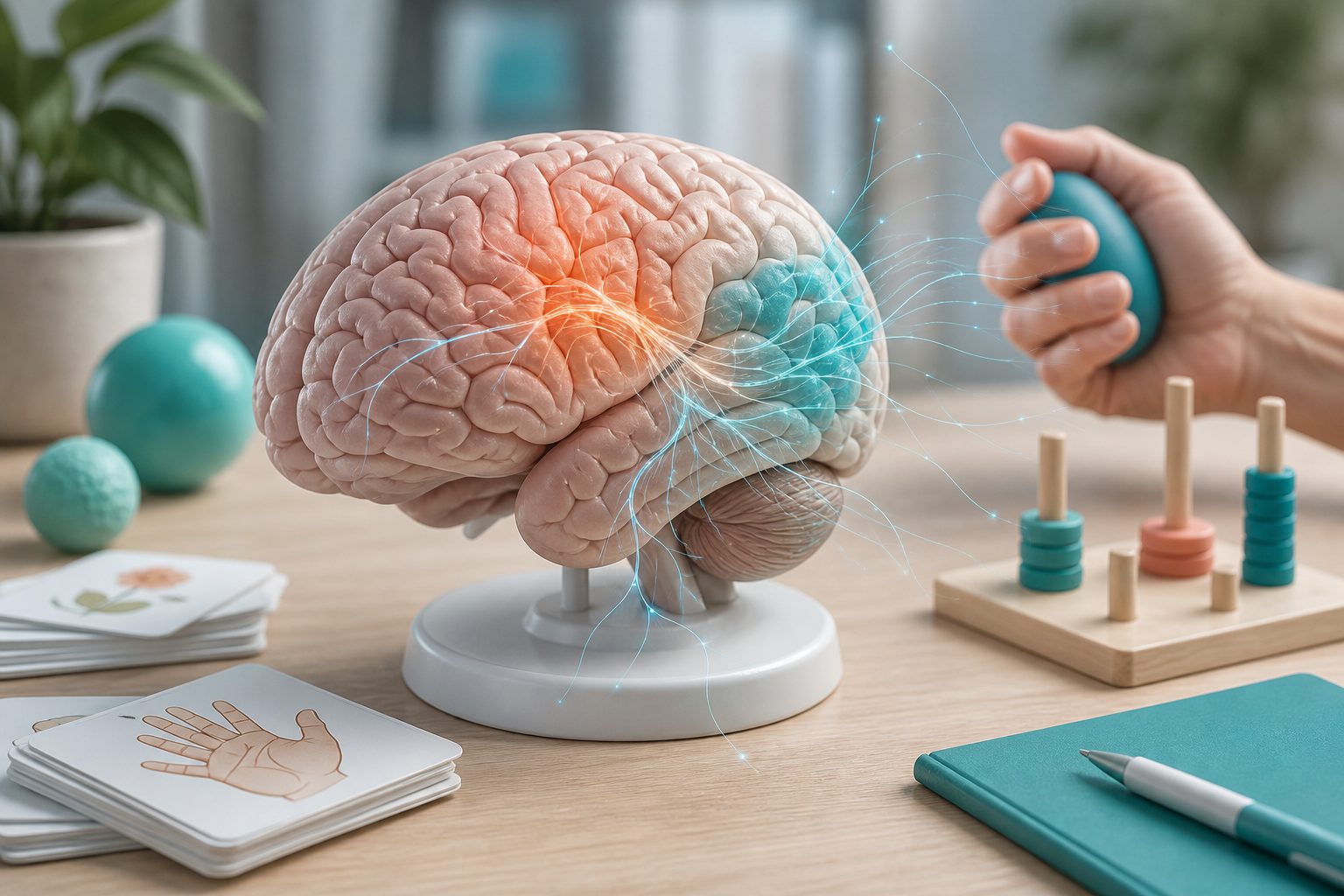
At first, there may be inflammation, disruption of connections, and loss of efficiency. Later on, the system begins to seek alternative pathways and reinforce those that work.
Networks, Not Isolated Parts
A function like writing or calculating does not reside in a single point. It depends on networks: attention, language, working memory, motor control, review, and processing speed.
- If attention fails, omissions and errors increase.
- If working memory fails, intermediate steps are lost.
- If speed decreases, everything takes more time.
- If fatigue appears, symptoms that seemed controlled resurface.
Why It Fluctuates So Much
The recovering brain has less reserve. A simple task may be easy at rest and difficult after an intense morning. Fluctuation is part of the process, not necessarily a sign of regression.
Recovery is not just about one area healing. It’s about a network working efficiently again.
That’s why training must combine practice and rest, challenge and regulation, repetition and real-life application.
After the acute phase, the brain does not stay "off." It starts a process to stabilize, find other paths, and reorganize.
At first, there may be inflammation and loss of efficiency. Then, the brain looks for alternative routes and strengthens the ones that work.
They are not loose pieces, they are networks
A function like writing or calculating depends on many things at once: attention, language, memory, movement control, speed.
- If attention fails: more mistakes.
- If memory fails: steps are lost.
- If speed decreases: everything takes more time.
- If fatigue appears: symptoms that seemed overcome return.
Why performance changes so much from day to day
The recovering brain has less margin. A simple task at rest can be hard after a busy morning. This is normal; it does not mean you are going backward.
Key idea
Recovering is not just about one area healing. It is about the whole network working well together again. That is why training combines practice and rest at the same time.
This content is educational and does not replace assessment, diagnosis or supervision by a healthcare professional.