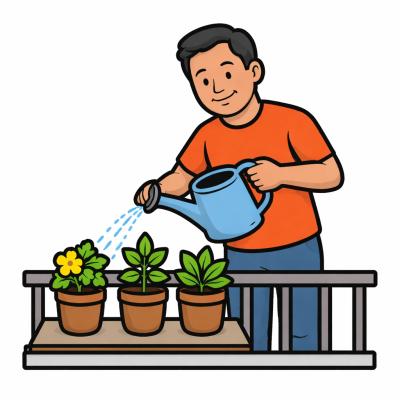
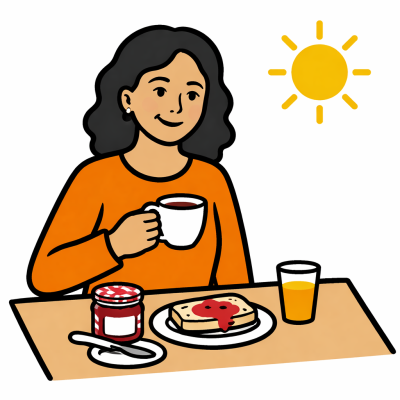
 09:00
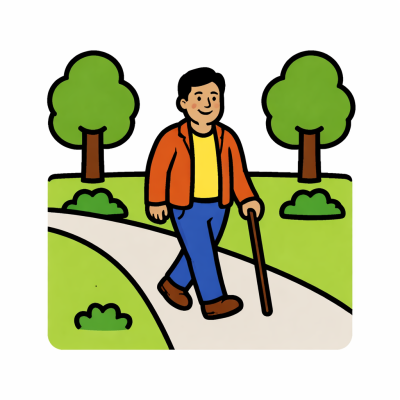 11:30
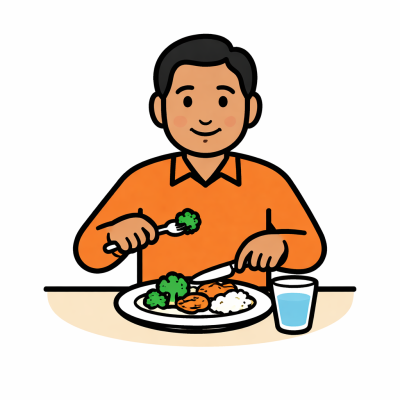 14:00

One task per screen
One question, a few large options and plenty of space. No menus, no distractions.
 Reactiva+
SIMPLE MODE
A way of using Reactiva+ designed for people who need more support: every screen has a single task, large type and buttons, optional voice and help that appears gradually. Whoever supports them decides how much, when and at what level.
WHO IT IS FOR


WHAT MAKES IT DIFFERENT
One question, a few large options and plenty of space. No menus, no distractions.

Questions are read aloud when needed and a button repeats them. A speaker button mutes it completely: some challenges are better read than heard.

No time limit and no penalty for mistakes. Whatever happens, the person finishes each challenge feeling they could do it.

First the question is repeated; then only two options remain; then a hint; finally the answer is pointed out. Every step of help is recorded.

Five levels per challenge, and some keep going up. The level adjusts itself with correct answers and help used, or a therapist or relative fixes it.

Real photos, our own pictograms and everyday vocabulary. With the family's own photos, if the carer adds them.
A SESSION
A round rotating between attention, memory, language, numbers and reasoning. It is presented as a ritual, not an obligation. It always starts by orienting: what part of the day is it?
After today's session the person may choose a challenge they enjoy, within the time set by whoever supports them.
The session ends with "My life": a photo or a question to chat about, with no right answer. It is reminiscence, not an exam.
FOR WHOEVER SUPPORTS

Minutes, days, the level of each challenge and the amount of help. Voice on or off.

With drawings and times, shown and read aloud on opening: "walk at half past eleven, lunch at two".

Days done versus planned, minutes, favourite challenges and how much is solved without help. Also by email every Monday.

If a planned day passes without a session, the carer gets a notice so they can sit with the person for a while.

Built on clear rules and never applied until the therapist validates it, or the family if no therapist is linked.

One useful fact, asked again after 30 seconds and after 1, 2, 4 and 8 minutes.
PRIVACY

Private: not published, not shared with third parties and not used to train AI. Only the person, their linked therapist and the accepted carer can see them.

Recording in "My life" is off by default. Only the carer can turn it on, it lasts 20 seconds at most and it is private.

Questions, routines and drawings generated by AI are checked by a person before reaching anyone.
WHAT IS KNOWN
THE CHALLENGES
The full list of simple-mode challenges by domain, with what is done in each. You can search and filter them.
No result matches your search.
| Challenge | Domain | What is done |
|---|---|---|
| What time of day is it? | Orientation | Is it morning, afternoon or night? The correct answer is the real one, with the device time. In higher levels, the day of the week. No time, with voice and help. |
| What season is it? | Orientation | Winter, spring, summer or autumn? The correct answer is the real one, according to the device date. At the highest level, the month. No time, with voice and help. |
| Remember this | Remember facts | One useful detail (a person, an object, a quote) with photo and phrase. It’s taught and asked; the app will ask again later. |
| Tap the matching one | Attention | A drawing or photo is shown at the top and several below. You must touch the one that is the same. No time, with voice instruction and help if needed. |
| Where is…? | Attention | It is said and shown a word and you have to find its photo among 2–6. No time, with voice and help. |
| Follow the light | Attention | A tile lights up and a sound plays; you have to touch it. At the high level, two in a row. No time, with voice and help. |
| Tap the color | Attention | Large colored shapes: touch the one requested by its color, its shape, or both. No time, with voice and help. |
| The odd one out | Reasoning and organisation | Between 3–4 photos, one does not belong to the group. Tap the one that isn’t. No time limit, with voice and help. |
| Find among many | Attention | Grid of 6–12 drawings: touch all the apples (or keys, flowers…). What you find stays marked. No time, with voice and help. |
| What was here? | Memory | A photo is shown for a few seconds, it is covered, and you must remember it among several. No time to answer, with voice and help. |
| Pairs | Memory | Memory with pictures and large cards: from 2 to 6 pairs. No timer; if it’s hard, one pair lights up. |
| Who is it? | Memory | Reminiscence with family photos: recognize who it is, or find a person by their name. No time limit, with voice and help. |
| What’s missing? | Working memory | A few photos are shown, one moment is covered, and all come back except one: you have to touch the missing one. No time, with voice and help. |
| Repeat the sequence | Working memory | Colors light up in order and you have to repeat them. Sequences from 1 to 4, no time, with voice and help. |
| The short story | Memory | A very short story is told with a photo and then a detail is asked among several photos. No time, with voice and help. |
| Listen and touch | Language | You hear a word and you have to tap its photo among 2–4. No time, with spoken instruction and help if needed. |
| What is it called? | Language | A photo is shown and you have to touch the word that names it. The words are read aloud. No time and with help. |
| Complete the sentence | Language | An incomplete sentence from daily life is spoken and you have to touch the photo that completes it. No time, with voice and help. |
| What comes next? | Language | The app says a very well-known series (numbers, days, months, letters) and you have to touch what comes next. No time, with voice and help. |
| Complete the proverb | Language | The app says the beginning of a very well-known proverb and you have to touch how it ends. At the highest level, popular songs. No time, with voice and help. |
| Read and touch | Language | A word written in large letters, no voice, and 2–3 photos: touch the one that matches. If needed, the app reads it aloud. No time and with help. |
| What goes with what? | Reasoning and organisation | A photo is shown and you have to touch the one that goes with it (the key with the door, the spoon with the soup). No time, with voice and help. |
| Sort | Reasoning and organisation | Two baskets above (food and things, animals and things, fruits and vegetables…) and one or more photos below: place each photo in its basket. No time, no dragging, with voice and help. |
| How many are there? | Numbers and calculation | The true units are shown (up to 10 pencils, circles, apples…) and you have to touch the number. No time, with voice and help. |
| Put in order | Numbers and calculation | Tap the shapes from smallest to largest, or the numbers in order. No time, with voice and help. |
| Which is more? | Numbers and calculation | Two groups of items (or two large numbers): touch where there is more. No time, with voice and help. |
| Addition with objects | Numbers and calculation | Two groups of visible objects («2 apples and 1 apple»): tap how many in total. No timer, with voice and help. |
| Coins | Numbers and calculation | Recognize coins and bills, add two coins and pay for a purchase. No time, with voice and help. |
| What time is it? | Numbers and calculation | A big analog clock: touch what time it is ("three o'clock", "six thirty") or what time lunch or dinner is. Without timing, with voice and help. |
| My day | Reasoning and organisation | Actions of the day out of order (getting up, breakfast, going out…): touch them in the order they are done. No time, with voice and help. |
| What do you need? | Reasoning and organisation | "To make coffee you need to...": touch the photo of what is needed between 2–4. At the high level, two things. No time, with voice and help. |
| Is it safe? | Reasoning and organisation | Everyday situations («Can you touch?», «Do you cross?», «Do you drink?»): answer Yes or No, or choose the safe one. Always with the explanation spoken. |
| Match the shape | Visual perception | A gray silhouette on top and 2–4 shapes below: tap the one that fits. In the higher level, the same shape rotated. No timer, with voice and help. |
| What is it? | Visual perception | A photo is partly covered and is uncovered little by little: touch the word that says what it is. It is noted with how much was uncovered when guessed. |
| How are they feeling? | Visual perception | A big face and 2–4 words: tap how it feels (happy, sad, angry, surprised, scared). No time, with voice and help. |
| Word search | Language | Una palabra escondida en una rejilla pequeña de letras, con su foto y la palabra escrita arriba. Hay que tocar sus letras en orden. Sin tiempo, con voz y ayuda. |
| Where did it light up? | Memory | In a small grid one, two or three squares light up. Then you have to touch the same ones. No timer, with voice and help: if needed, they are shown again. |
| Are they the same? | Attention | Two photos side by side: are they the same? You answer by tapping “Yes” or “No.” In the higher levels they are from the same category or figures that only change color or size. No time, with voice and help. |
| Tap when you see it… | Attention | A large photo changes by itself. You should touch it only when the one requested appears («only when the dog appears»). Attention and inhibition without hurry, with voice and help. |
| Quick word | Working memory | A word appears in large letters for a few seconds and then disappears. Then you have to touch it among 2–3 words written and read. No time to respond, with voice and help. |
| The right color | Attention | A large color and the names of 2–3 colors: touch the one that is it. In higher levels the word is written in a different color and you have to touch the ink color. No time, with voice and help. |
| The missing letter | Language | A photo and its name written in large letters with one letter hidden: touch the missing letter. No time, with voice and help. |
| Subtraction with objects | Numbers and calculation | "There were 4 apples and 1 is eaten": the visible objects, one is crossed out, and you have to touch how many remain. No time, with voice and help. |
| Which number comes next? | Numbers and calculation | "1, 2, 3, and now?": you see and hear a sequence of numbers and you have to tap the one that comes next. No time, with voice and help. |
| Jumbled word | Language | A photo and the letters of its name shuffled: touch them in order to form the word. No time, with voice and help. |
| Jumbled sentence | Language | Los trozos de una frase cotidiana desordenados: tocarlos en orden para formar la frase, que se lee entera al acabar. Sin tiempo, con voz y ayuda. |
| Means the same | Language | «What word means the same as big?» (or «the opposite of cold»): touch the word. They are read aloud. No time and with help. |
| Is it an animal? | Reasoning and organisation | A large photo and a question ("Is it an animal?", "Can it be eaten?", "Is it a fruit?"): touch Yes or No. No time, with voice and help. |
| The shopping list | Memory | You see and hear 2–4 items from the shopping list, they’re covered, and you have to touch which one was on the list. No time, with voice and help. |
| What went with what? | Memory | Pairs of things are shown (for example, “the dog with the ball”), they are hidden, and you have to touch which goes with each. No time, with voice and help. |
| Remember the number | Working memory | A 2–4 digit number appears big and is heard; it disappears and you have to touch it among 2–3 numbers. No time to respond, with voice and help. |
| What number is it? | Numbers and calculation | You hear a number ("forty-two") and you have to touch it among 2–3 numbers written in large print. No time, with voice and help. |
| How much do you pay? | Numbers and calculation | Two items with their price ("bread 1 €, milk 2 €") and you have to touch how much is paid in total. No time, with voice and help. |
| Share it out | Numbers and calculation | “There are 6 cookies for 2 people, how many does each get?” Things you can see and you have to touch the number. No time, with voice and help. |
| Which number is bigger? | Numbers and calculation | Two or three large numbers and you have to touch the biggest (or the smallest). No time, with voice and help. |
| What day is today? | Orientation | “What day of the week is today?” (and in higher levels the month and year), with 2–3 options. If you don’t know, the app says it: there’s no error. |
| What rhymes? | Language | "What rhymes with cat?": touch the word that sounds the same at the end, between 2–3 with a photo. No time, with voice and help. |
| What letter does it start with? | Language | A photo, you say the name, and you have to touch the letter that starts it among 2–4 large letters. No time, with voice and help. |
| What is it used for? | Language | A photo or a drawing of an object and you have to touch to what it’s for («to cut»); at higher levels, the opposite: «what is it for to cut?». No time, with voice and help. |
| What are they doing? | Language | A drawing of someone doing something and you have to touch what they do («eat», «sleep», «run»); in higher levels, reversed. No time, with voice and help. |
| Mental math | Numbers and calculation | Small additions and subtractions spoken aloud and shown as numbers, with no objects in sight (with help cues if it’s hard). No time, with voice and help. |
| To reach ten | Numbers and calculation | "I have 7, how many more to 10?": the friendly numbers of ten, with things visible at the lower levels. No time, with voice and help. |
| Double and half | Numbers and calculation | “What is the double of 3?” and “what is the half of 8?”, with objects visible at the lower levels. No time, with voice and help. |
| How much change do you get? | Numbers and calculation | «You pay with 5 euros for something that costs 3, how much do you get back?»: change calculation with coins and bills. No time, with voice and help. |
| The number cloud | Numbers and calculation | Numbers spread across the screen and you have to touch them in order, from smallest to largest (and in the high level, backwards). No time, with voice and help. |
| What happens next? | Reasoning and organisation | "If I leave the ice cream in the sun…" and you have to touch what happens; at the high level, three steps of a chain are ordered. Simple cause-and-effect logic. No time, with voice and help. |
| Follow the pattern | Reasoning and organisation | Color tiles repeat ("red, blue, red, blue...") and you have to tap the tile that comes next. Simple logic. No time, with voice and help. |
| What comes next? | Language | "Which day comes after Tuesday?", with months and letters at the higher levels. Automatic sequences kept very conservatively. No time, with voice and help. |
| Tap as many as I ask | Numbers and calculation | A grid of identical objects and “Tap 3”: you touch the ones asked for and press “Done”. Count with your fingers. No time, with voice and help. |
| Which is more…? | Reasoning and organisation | Two or three photos and a comparison: «Which is bigger?», «which is faster?», «which weighs more?». No time, with voice and help. |
| What color is it? | Language | A photo of something with a distinctive color and you have to touch its color among several samples. No time, with voice and help. |
| Where does it go? | Language | A photo of something from home and you have to touch where it is used (kitchen, bathroom, bedroom, living room, street). No time, with voice and help. |
| Name the picture | Language | A drawing of a thing or an animal and you have to touch to say its name. No time, with voice and help. |
| Where do you find it? | Language | A drawing of a thing or an animal and you have to touch where it is (kitchen, workshop, farm, office…). No time, with voice and help. |
| Things in… | Reasoning and organisation | They say a place (the kitchen, the workshop, the farm…) and you have to touch the drawing that matches that place. No time, with voice and help. |
| Maze | Visual perception | Take the person home through a small maze, tapping large arrows. No dragging, no timer; if you hit a wall, nothing happens and the app helps. |
| The opposite | Language | "What is the opposite of large?": tap the opposite word among 2–3, with very common words. No time, with voice and help. |
| Which one is for eating? | Language | “Which of these words is a thing to eat?”: touch the word from the group that is asked for among 2–3, with words that are very common. No time, with voice and help. |
| Which one repeats? | Attention | Two cards with pictures: only one picture is on both cards. Tap that one. This is the "Quick symbols" challenge from Reactiva+, made for simple mode: big pictures, no time limit, and with voice and help. |
| The differences | Attention | The seven differences game: two almost identical pictures, one above the other. You have to touch what is different. You can touch in either picture, and what you find gets circled. No timer, with voice and help. |
| Complete the word | Language | You see «ca__» with a hint and you have to touch the missing part («ma», «sa»). Very common words. No time, with voice and help. |
| Arrange the numbers | Numbers and calculation | Tap 3–5 numbers from the smallest to the largest (or the other way around). No time, with voice and help. |
| Which costs less? | Numbers and calculation | Two or three products with their price and you have to touch the cheapest (or the most expensive). Money of each day. No time, with voice and help. |
| Add the dice | Numbers and calculation | One, two, or three large dice and you have to touch how many pips there are in total. No time, with voice and help. |
| How am I today? | Orientation | “How are you today?”, “Are you tired?”, “Does anything hurt?”: touch the face that speaks it. There is no right answer; what is chosen stays with the caregiver. |
| Is it the same as before? | Working memory | The drawings come one by one and in each one you have to say if it is the same as the previous or if it is another (task 1-back). No time, with voice and help. |
| Have you seen it before? | Memory | You see 2–5 pictures with their names; then they appear one by one, mixed with new ones, and you have to say if you saw them or not (recognition yes/no). No time, with voice and help. |
| Connect the dots | Attention | Large numbers spread on the screen; you must touch them in order (1, 2, 3…) and they join with a line. No time: count the order, not the speed. |
| Where does the number go? | Numbers and calculation | A large straight line with the start and end written (0 and 10, 0 and 20, 0 and 100) and several boxes with «?»; you must touch where the requested number goes. No time, with voice and help. |
| Tap the figure I say | Language | You hear and read an instruction ("Tap the red circle", "the small blue star") and you have to tap that figure among several (instruction comprehension, like Token Test). No time, with voice and help. |
| Which is the same, but rotated? | Visual perception | A picture on top and 2–4 rotated pictures below; you must touch the one that is the same even if it is rotated (mental rotation). At higher levels one of the others is the same picture 'in the mirror'. No time, with voice and help. |
| What month is it? | Orientation | “What month is it?”, “What year is it?”, “What day of the month is it?”: touch today’s answer (temporal orientation). No time, with voice and help. |
| Une números y letras | Attention | Como «Une los puntos», pero alternando número y letra (1, A, 2, B, 3, C…): hay que mantener dos series a la vez y cambiar entre ellas. Para personas que necesitan poca ayuda; no conviene en fases moderadas. Sin tiempo, con voz y ayuda. |
| What has changed? | Working memory | You see 2–5 pictures in a row, they are covered for a moment and come back in the same place, but one is different; you must touch the one that has changed (change detection). No time, with voice and help. |
| What clock shows the time…? | Numbers and calculation | You are asked for a time ("three o'clock", "six-thirty") and you have to touch, among several analog clocks, the one that shows it: the reverse of "What time is it?". No timer, with voice and help. |
| Where is the middle? | Visual perception | A large bar, each time in a different place on the screen, with 3–5 marks; you have to touch the one that is exactly in the middle or, at higher levels, at the left or right edge (bisecting lines, useful after a stroke). No time, with voice and help. |
| Is it true? | Language | A short sentence about everyday things is read and heard («Dogs bark», «Fish fly») and you have to tap «Yes, it is true» or «No» (truth judgment). No time, with voice and help. |
| Tap what I say to you, in order | Working memory | You hear a short list of names (cat, apple, car) and you have to touch those drawings in the same order among several (auditory memory span with pointing response). No time, with voice and help. |
| Which one is on top? | Language | In the center there is a reference item (a box, a chair) and around 2–4 drawings; you have to touch the one that is where it is told: on top, underneath, to the left or to the right (understanding spatial relations). No time, with voice and help. |
| What goes with…? | Language | A picture is shown ("the key") and you have to touch the one that goes with it ("the door") among others. No need to name anything: just understand the relationship between the things. No time, with voice and help. |
| How many are there, more or less? | Numbers and calculation | A cloud of dots and several quantities: you have to touch the one that looks most like the number of dots, without counting one by one. No time, with voice and help. |
| When it comes up… | Working memory | A cue is said: “when the bee shows up, press Warning” and then you answer a simple question (“is it an animal?”) picture after picture. When what is announced appears, you must remember it and press “Warning.” No time, with voice and help. |
| Learn the names | Memory | With the family photos uploaded by the caregiver: first each person is shown with their name and then asked, what is their name, later and later, without mistakes. At least 2 photos are needed. |
| Put the clock in time | Numbers and calculation | A time is asked for ("three-thirty") and you must move the hands of a clock to it: first the short hand (hours) and then the long hand (minutes). Drag with the mouse or finger, or use the buttons. No timer, with voice and help. |
| The Intruder Word | Language | Three or four words and one is not in the same group: you have to touch the one that doesn't belong. Very common words. No time, with voice and help. |
| Before and After | Numbers and calculation | “What number comes after 7?” (or before, or between two): touch the number between 2–3. No time, with voice and help. |
| Which one came first? | Memory | 3–7 photos are shown one by one, with their name spoken; then two of them are shown and you have to touch the one that came first (temporal order). No time, with voice and help. |
| It came out twice | Memory | Photos are shown one by one; in each one you have to touch “Next” if it is new or “Already shown” if it has appeared before (continuous recognition). Each photo waits: no time, with voice and help. |
| In What Order? | Memory | 3–6 photos appear one by one; afterward they appear out of order and you must tap them in the order they came out, filling numbered gaps (serial order). No time, with voice and help. |
| Where did I put it? | Memory | A plan of 3–5 rooms; you place 2–4 objects ('the glasses, in the kitchen'), they disappear and then you are asked where each one was (and, at higher levels, what was in a room). No time, with voice and help. |
| The pair of… | Memory | We show 2–4 pairs of photos (e.g., “the apple with the car”) and then, when you see one, you touch the one it belonged to (associated pairs). At higher levels there is a second round. No time, with voice and help. |
| Who Said It? | Memory | Two characters, Ana and Luis, say 2–8 words with a speech bubble, photo and voice; afterwards it asks who said each one (touch the character) and, at high levels, what one of them said (source memory). No time, with voice and help. |
| In reverse | Working memory | Like “Repeat the sequence,” but you must touch the colors in reverse, starting from the last (reverse order). No time, with voice and help. |
| The last one out | Working memory | They show photos one by one without knowing how many will be; when they stop, touch which was the last (and in higher levels the two or three last, in order). No time, with voice and help. |
| Tap and count | Attention | Photos appear one by one. You have to tap the photo when it is an animal (if not, 'Next') and, while you do, keep counting how many apples (or other things) have passed; at the end you are asked how many they were (dual task). No time, with voice and help. |
| Tap and Remember | Attention | At the start, something to remember is shown ("remember: the key"); then come 3–6 rounds of touching the photo exactly like the model; at the end you are asked what you had to remember (retain while you do something else). No time, with voice and help. |
| Tap the big one | Visual perception | The same photo two or three times, in different sizes: you have to touch the big one (or the small one). Without reading or remembering: just look and touch. For those who need a lot of help. |
| The Same Color | Visual perception | On the top is a large color stain and below are 2–4 stains: you must touch the one with the same color. You don’t need to know the color name: just compare. For someone who needs a lot of help. |
| Tap the person | Reasoning and organisation | Between 2–4 drawings you have to tap the person (or the animal). Person, animal and object are the most basic categories and the ones that stay the most the same. For someone who needs a lot of help. |
| Tap where I point | Attention | There are 2–4 photos and a big hand points to one of them: you must touch the pointed one. You don’t need to understand words or remember anything—just follow the gesture. For people who need a lot of help. |
| Touch your name | Language | The person’s name in very large letters next to one or more other names: you have to touch theirs. If the account has no name, use “HELLO”. For someone who needs a lot of help. |
| What’s inside? | Attention | A large closed box: when you touch it it opens and a photo with its name appears and a small celebration. In higher levels you are asked afterward what was inside. For someone who needs a lot of help. |
| One or many? | Numbers and calculation | Two cards with the same thing: in one there is one and in the other many; you have to touch where there are many (or one). Don’t count or read numbers. |
| Up or Down? | Language | Two photos, one on top of the other: “tap the top one” or “the bottom one.” In higher levels, three in a column and then four (“top right”). For someone who needs a lot of help. |
| Join the syllables | Language | You hear the syllables of a word separated ("ca… sa") and you have to touch the picture of that word among 2-4. It is the inverse of “How many syllables?”: put the pieces together. Without reading. |
| Trace the Letter | Language | A huge dotted uppercase letter, with a word and its photo (“A of tree”): you have to trace it with your finger following a light. It counts as correct when you have covered most of the stroke. For someone who needs a lot of help. |
| Repeat | Language | You hear a word (with its photo) or a short phrase and you have to repeat it aloud. With the microphone the app checks that you have said almost all the words; without it, you touch “I said it.” |
| Spaced Review | Memory | A personal data point (how the caregiver is called, or the caregiver’s own name) is stated, asked right away, and asked again after increasingly longer intervals, with tiny breaks of one touch between items. If it fails, it is repeated and the interval lowers. |
| What was she doing? | Memory | You hear 1–3 short phrases (“the girl eats bread”) while watching who does it and the photo of the thing; then you’re asked “what was the girl doing?” and you tap the action among three (drawing + word, spoken). The phrases are approved by a therapist. |
| What is it? | Language | You hear a definition ("it helps you eat soup") and you touch the photo that is, among 2–4. It is the opposite of "What is it used for?" The definitions are written by AI and approved by a therapist. |
| Duck or Cat? | Language | You hear a word and you have to touch its image among two that differ only in one sound (duck / cat, house / bed, ham / soap). Hearing and image: no reading. |
| Word and photo | Language | You see a short, huge word in uppercase (SOL, PAN, CAMA), you hear it, and you have to touch its photo among 2-3. The word always comes with voice and image: it’s recognized, not deciphered. For someone who needs a lot of help. |
| My name, letter by letter | Language | The letters of the person’s name, scrambled and large: you must touch them in order. Each letter is spoken when touched and at the end the whole name is spoken. At the lower levels the name appears at the top as a model. For someone who needs a lot of help. |
| Write with your finger | Language | A photo and its short word in light gray, very large: you must trace each letter with your finger, one after another. Each finished letter is spoken and at the end the whole word. For someone who needs a lot of help. |
| Starts the Same | Language | One photo on top; you hear “shoe starts with za… which one starts the same?”; below 2-4 photos and you must touch the one that starts with the same sound. No reading. |
| Two Orders | Language | “Tap the bread and then the chair”: among 4–6 photos you must tap the two in the order spoken. Practice following orders and remembering the order. |
| Where is the A? | Language | You hear the name of a letter and you have to touch it among 2-4 huge uppercase letters. When you get it right, a photo appears that starts with that letter (“A for árbol”). For someone who needs a lot of help. |
| Say the word | Language | A big photo and «what is this?»: you have to say it aloud. With the microphone the app listens; without it, you tap «I said it». If it doesn’t come out, give a hint, then how it starts and at the end says the word to repeat. |
| What color was it? | Memory | 2–4 photos are shown, each with a large color stain and named (“the plate, with the red”); they disappear and you are asked which color each one had, by tapping between color stains. No time, with voice and help. |
| How many times? | Memory | 6–10 photos pass by one by one; one of them appears 1, 2 or 3 times. Then you are asked how many times it appeared, tapping 1, 2 or 3. No time, with voice and help. |
| How many syllables? | Language | You see a photo and hear its name in beats (za-pa-to), with a clap per syllable; you have to tap the number of claps (1 to 4). All by ear: reading is not needed. |
| With a clue | Memory | 2–6 photos are shown, each with its category («this is a fruit: apple»), a short task is done in between, and then the question is asked «which fruit was it?» among photos of other categories. No time, with voice and help. |
| In the end I ask you | Memory | 3–4 photos are shown ("remember these three"), two or three short filler tasks are done, and then you have to touch, among 5–8 photos, which ones they were. No time, with voice and help; the ones touched too many times are recorded as intrusions. |
| My life | Closing | Reminiscence: a photo and an open question to talk about your own life. There is no right answer; the caregiver notes how you participated. |