 Reactiva
ALL THE GAMES
70 games to train the mind.
Each page explains what is trained, how it is played and which other games it combines with. Open any of them to learn more and play it in Reactiva+.
No result matches your search.
| Title | Domain | Sub-area | Tags | Description |
|---|---|---|---|---|
| Animal Mosaic | Attention | Visuospatial attention | attentionmental rotation | Find the exact spot in the mosaic a cut-out silhouette came from and place the piece there; advanced levels also require rotating it. |
| Bottle Sequence | Attention | Numerical tracking | attention | Follow the fixed color sequence by tapping the color on the palette first and then the bottle with the matching number, starting from 1. Trains sustained attention, numerical tracking, and inhibitory control. |
| Card Memory | Attention | Sustained attention | attentionmemoryworking memorysustained attentioncognitive flexibility | Cards go by one at a time. At the end, tell us how many times you saw each one. |
| Correct Color | Attention | Inhibitory control | attention | Match the word and the ink color to train attentional inhibition. |
| Flash Color | Attention | Fast attention | attention | The stimulus appears briefly. Remember the ink color. |
| Logic Mosaic | Attention | Spatial reasoning | attentionspatial reasoningmental rotation | Place the 12 pentomino pieces on the board, rotating and flipping them as needed, until it's fully covered. |
| Quick Symbols | Attention | Processing speed | attention | Locate target symbols quickly and accurately. |
| Read the Word | Attention | Attention and inhibition | attention | Name the written word and ignore the ink color. |
| Calculation Against the Clock | Calculation | Mental calculation under pressure | time pressuredivided attentionmental calculation | Solve the operation before the pill runs out. The more you get right in a row, the more pills will appear at once. |
| Calculation by Color | Calculation | Functional calculation and inhibition | attention | Solve operations where the color indicates the calculation rule. |
| Chain Calculation | Calculation | Working memory | working memory | Update a running mental result by applying a sequence of operations. |
| Exact Change | Calculation | Functional calculation | Calculate the total of a purchase or the change received when paying. | |
| Final Time | Calculation | Functional calculation | Calculate times from a starting time and a duration. | |
| Functional Calculation | Calculation | Mental calculation | Trains mental operations useful for everyday tasks. | |
| Hidden Digits | Calculation | Numerical reasoning | hidden digitshidden numbersnumerical reasoningattention | Complete operations with hidden digits using calculation, visual search, and numerical inference. |
| Number Ladder | Calculation | Numerical reasoning | calculationdrag and drop | Calculate the result of each operation and place the steps in order, ascending or descending. |
| Number Pattern | Calculation | Numerical reasoning | numerical reasoningworking memory | Find the rule in a series, fill in gaps, spot outliers, and review number patterns. |
| Number Sequences | Calculation | Numerical reasoning | numerical reasoning | Detect the pattern in a series and select the number that comes next. |
| Pyramids | Calculation | Numerical reasoning | numerical reasoning | Complete the hidden cell by applying addition relationships in a number pyramid. |
| Say the Number | Calculation | Numerical naming | language | Look at or listen to numbers and say them out loud, marking whether the output was fluent or blocked. |
| Crossed Math | Calculo | Numerical reasoning | cross maths | Complete equations that cross by sharing a central cell. |
| Number Crossword | Calculo | Cross calculation | number crossword | Fill a grid of crossing operations that are consistent horizontally and vertically. |
| Cross Responses | Executive | Laterality and inhibitory control | inhibitory controlvisuomotor coordination | Tap the indicated number and confirm the lateral, crossed, or contralateral response. |
| Double Rule | Executive | Working memory and flexibility | working memorycognitive flexibilityselective attention | Two boxes, each with its own rule. Once the rule disappears from the screen, you have to keep remembering it from memory. |
| Follow Spatial Instructions | Executive | Visuospatial processing | Read spatial instructions and decide whether the relationship between objects is true before answering. | |
| Mental Mirror | Executive | Symmetry and geometric reasoning | memory | Memorize a pattern on one side of an axis and reconstruct its exact mirror image on the other side. Trains spatial perception, symmetry, and visuoconstructive planning. |
| Mirror Blocks | Executive | Mental rotation and mirror symmetry | spatial rotationgeometric reasoningvisuoconstructive planning | Work out how to turn the piece so that, together with its reflection in the mirror, it forms exactly the image on the card. |
| Órdenes visuales | Executive | Comprehension and working memory | working memory | Read the instruction, find the right shape and inhibit automatic responses. |
| Reactive Body | Executive | Attention and inhibition | Watch shape and color: if they match, tap that object; if not, find the missing object. | |
| Rule Switching | Executive | Cognitive flexibility | attention | Classify stimuli by switching the active rule: color, shape, number, or parity. |
| Sort the Balls | Executive | Planning | ball sortproblem solving | Move colored balls between tubes until each one holds a single color. Every level is generated and verified to always have a solution. |
| Spatial Rotation | Executive | Mental rotation and visuospatial memory | memory | Memorize cells on a grid and mark where they'd end up after a rotation. Trains working memory, mental rotation, and spatial orientation. |
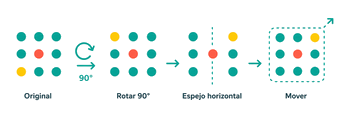
| Pattern Transformation | Funciones ejecutivas | Visuospatial reasoning | cognitive flexibilityvisual reasoning | Compare two dot patterns and decide if one is a rotation, mirror, or shift of the other, or if it's different. |
| Contradiction | Language | Logical reasoning and inference | languageexecutive functionsworking memoryreading comprehension | Read two statements and decide whether they're compatible, contradictory, or if the relationship can't be determined. |
| Correct Statements | Language | Logical reasoning and inference | reading comprehensionlanguageexecutive functions | Read a statement and choose which option could also be true at the same time. Trains reading comprehension, logical inference, and verbal reasoning. |
| Fleeting Word | Language | Working memory | languageworking memoryattentionlexical recall | The letters of a hidden word appear one at a time, in their real position, for a brief instant. Memorize where each one goes and write the whole word. |
| Hangman | Language | Lexical access | languagelexical access | Guess catalog words letter by letter before running out of attempts. |
| Hidden Letters | Language | Phonological recall | languagephonological recallauditory closure | A word is missing one or more syllables: fill in the blanks with the missing letters. The syllable split is always correct, computed by the game itself rather than improvised. |
| Letter Maze | Language | Working memory | languageworking memoryattention | Navigate a real maze (tapping letters in order or dragging through the corridors) from entrance to exit, forming a word. |
| Letter Tangle | Language | Selective attention | languageletter tangleselective attention | Connect adjacent letters on a grid, without repeating a cell, until you form the hidden word. |
| Numbers in Context | Language | Verbal numerical access | languagefunctional reading | Read sentences with embedded numbers and say them fluently within a functional context. |
| Scrambled Words | Language | Lexical access | languagelexical accessdrag and drop | Rearrange scrambled letters to reconstruct words from the catalog or dictated by microphone. |
| Sentence Mosaic | Language | Planning and text sequencing | languagedrag and dropexecutive functions | Order blocks of several grid rows from top to bottom to reconstruct the hidden sentence. |
| Sentence Puzzle | Language | Comprehension and verbal planning | languagedrag and dropattentionexecutive functions | Drag sentence fragments until you reconstruct it in the correct grid. |
| Sound and Meaning | Language | Cognitive flexibility | languagecognitive flexibility | Fill in the "?" cell of a 2×2 grid with the only word that shares a category with its column partner and an initial sound with its row partner. |
| Synonyms & Antonyms | Language | Semantic lexicon | language | Choose equivalent or opposite words to reinforce lexical precision and semantic flexibility. |
| The Odd One Out | Language | Semantic organization | languageverbal reasoningselective attention | Find the word that doesn't belong to the group to train categorization and verbal reasoning. |
| Verbal Relations | Language | Verbal reasoning | language | Works on semantic association, conceptual relations, and verbal flexibility. |
| Wheel of Fortune | Language | Comprehension and lexical access | languagelexical accessverbal memoryinhibitory control | Uncover hidden phrases letter by letter to train reading, lexical access, and verbal strategy. |
| Word Memory | Language | Verbal memory | memorylanguageverbal memory | Memorize words and recognize them among distractors to train verbal encoding and semantic discrimination. |
| Word Search | Language | Visual search | languageword searchvisual searchattention | Find hidden words in a grid of letters using touch or mouse selection. |
| Word Sum | Language | Calculation and lexical access | languageworking memorylexical access | Assign A=1…Z=26 and calculate the letter sum of each word to train calculation and lexical access. |
| Words Backwards | Language | Working memory | languageverbal memoryreverse order | Use words from the catalog or dictated by microphone and write them in reverse order. |
| Numbers and Letters | Lenguaje y cálculo | Lexical access and calculation | languagecognitive flexibility | Alternate rounds of letters and numbers to train lexical access, mental calculation, and strategy. |
| Associated Pairs | Memory | Verbal memory | memoryverbal memory | Memorize word pairs and retrieve them with a cue. Trains associative encoding and working memory. |
| Auditory Sequence | Memory | Sequential memory | memory | Listen to and watch a sequence. Then repeat it in the same order. |
| Backward Sequence | Memory | Working memory | backward spanmemory | Hold a sequence and repeat it in reverse order. |
| Card N-Back | Memory | Working memory and updating | memoryworking memorysustained attention | Compare each card with the one that appeared N steps ago to train working-memory updating. |
| Color Sequence | Memory | Sequential visual memory | memoryattention | Memorize a series of colors and reproduce it in the indicated order. |
| Dot Pattern | Memory | Visuospatial processing | memorysustained attention | Memorize a path of dots on a grid and reproduce it in the same order. |
| Dual Task | Memory | Working memory | memorydual taskworking memoryattention | Memorize a sequence, complete an interfering task, and recall it at the end. |
| Forward Sequence | Memory | Working memory | forward spanmemory | Listen to or read a sequence and repeat it in the same order. |
| Free Recall | Memory | Working memory | memoryfree recallworking memory | Watch or listen to a sequence, let it disappear, and reproduce it with no cues. |
| Matching Pairs | Memory | Visual memory | memory | Find matching pairs of pictures by remembering where each card is. |
| Memory City | Memory | Working and visuospatial memory | memoryworking memory | Walk through a city, link objects to each place, and recall the route step by step. |
| Pattern N-Back | Memory | Visuospatial working memory | memoryworking memory | Decide whether the current dot pattern matches the one that appeared N turns ago. |
| Position Memory | Memory | Visuospatial memory | memory | Observe, retain, and reproduce positions on a grid. |
| Solve It | Memory | Spatial memory and route planning | memory | Memorize where the obstacles are and trace from memory the shortest path from the character to the goal. |
| Symbol Sequence | Memory | Visual working memory | memoryworking memory | Watch a sequence of symbols and reconstruct the series in order. |
| The New Ones | Memory | Recognition memory | memory | Memorize a grid of images and, when some change, mark only the new ones. |
Memory 16

Position Memory →
Observe, retain, and reproduce positions on a grid.

The New Ones →
Memorize a grid of images and, when some change, mark only the new ones.

Solve It →
Memorize where the obstacles are and trace from memory the shortest path from the character to the goal.
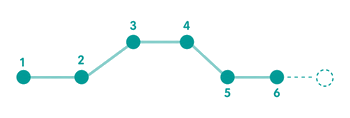
Dot Pattern →
Memorize a path of dots on a grid and reproduce it in the same order.
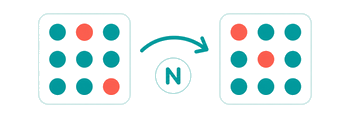
Pattern N-Back →
Decide whether the current dot pattern matches the one that appeared N turns ago.

Associated Pairs →
Memorize word pairs and retrieve them with a cue. Trains associative encoding and working memory.
Forward Sequence →
Listen to or read a sequence and repeat it in the same order.

Backward Sequence →
Hold a sequence and repeat it in reverse order.
Auditory Sequence →
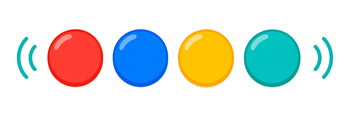
Listen to and watch a sequence. Then repeat it in the same order.

Matching Pairs →
Find matching pairs of pictures by remembering where each card is.
Memory City →
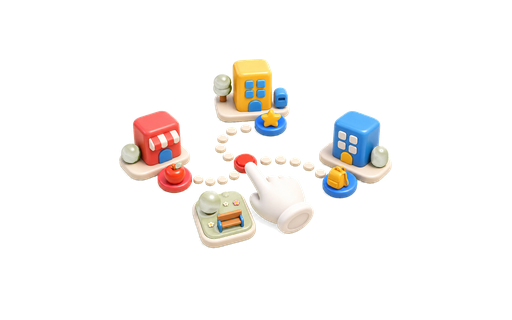
Walk through a city, link objects to each place, and recall the route step by step.

Dual Task →
Memorize a sequence, complete an interfering task, and recall it at the end.

Free Recall →
Watch or listen to a sequence, let it disappear, and reproduce it with no cues.
Card N-Back →
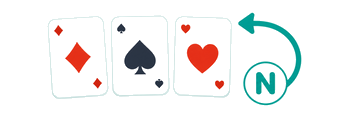
Compare each card with the one that appeared N steps ago to train working-memory updating.
Color Sequence →
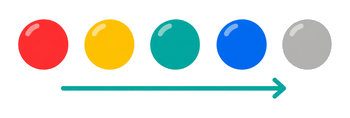
Memorize a series of colors and reproduce it in the indicated order.

Symbol Sequence →
Watch a sequence of symbols and reconstruct the series in order.
Language 20

Verbal Relations →
Works on semantic association, conceptual relations, and verbal flexibility.

Synonyms & Antonyms →
Choose equivalent or opposite words to reinforce lexical precision and semantic flexibility.

The Odd One Out →
Find the word that doesn't belong to the group to train categorization and verbal reasoning.

Wheel of Fortune →
Uncover hidden phrases letter by letter to train reading, lexical access, and verbal strategy.

Word Memory →
Memorize words and recognize them among distractors to train verbal encoding and semantic discrimination.
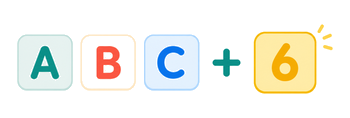
Word Sum →
Assign A=1…Z=26 and calculate the letter sum of each word to train calculation and lexical access.

Words Backwards →
Use words from the catalog or dictated by microphone and write them in reverse order.
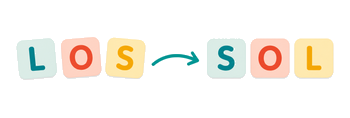
Scrambled Words →
Rearrange scrambled letters to reconstruct words from the catalog or dictated by microphone.

Sentence Puzzle →
Drag sentence fragments until you reconstruct it in the correct grid.
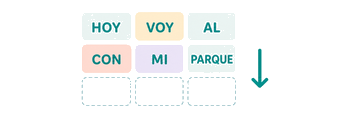
Sentence Mosaic →
Order blocks of several grid rows from top to bottom to reconstruct the hidden sentence.
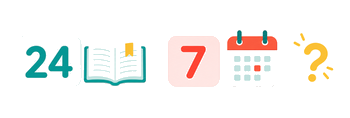
Numbers in Context →
Read sentences with embedded numbers and say them fluently within a functional context.

Hangman →
Guess catalog words letter by letter before running out of attempts.

Word Search →
Find hidden words in a grid of letters using touch or mouse selection.

Letter Tangle →
Connect adjacent letters on a grid, without repeating a cell, until you form the hidden word.
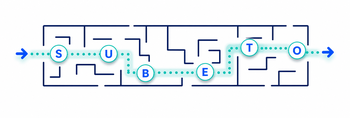
Letter Maze →
Navigate a real maze (tapping letters in order or dragging through the corridors) from entrance to exit, forming a word.

Sound and Meaning →
Fill in the "?" cell of a 2×2 grid with the only word that shares a category with its column partner and an initial sound with its row partner.

Contradiction →
Read two statements and decide whether they're compatible, contradictory, or if the relationship can't be determined.

Correct Statements →
Read a statement and choose which option could also be true at the same time. Trains reading comprehension, logical inference, and verbal reasoning.
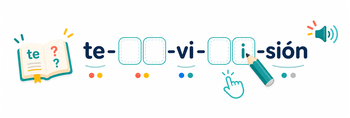
Hidden Letters →
A word is missing one or more syllables: fill in the blanks with the missing letters. The syllable split is always correct, computed by the game itself rather than improvised.
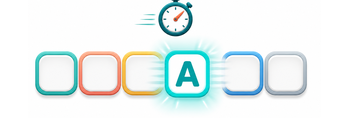
Fleeting Word →
The letters of a hidden word appear one at a time, in their real position, for a brief instant. Memorize where each one goes and write the whole word.
Calculation 12
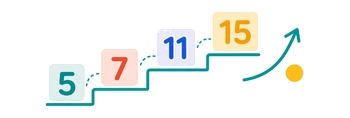
Number Ladder →
Calculate the result of each operation and place the steps in order, ascending or descending.

Say the Number →
Look at or listen to numbers and say them out loud, marking whether the output was fluent or blocked.
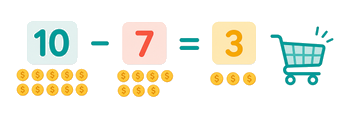
Exact Change →
Calculate the total of a purchase or the change received when paying.

Final Time →
Calculate times from a starting time and a duration.
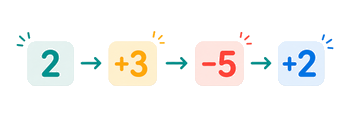
Chain Calculation →
Update a running mental result by applying a sequence of operations.

Pyramids →
Complete the hidden cell by applying addition relationships in a number pyramid.

Number Sequences →
Detect the pattern in a series and select the number that comes next.
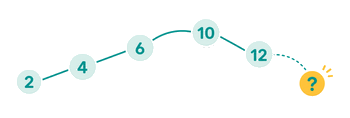
Number Pattern →
Find the rule in a series, fill in gaps, spot outliers, and review number patterns.

Hidden Digits →
Complete operations with hidden digits using calculation, visual search, and numerical inference.
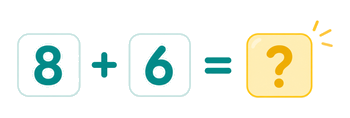
Functional Calculation →
Trains mental operations useful for everyday tasks.

Calculation by Color →
Solve operations where the color indicates the calculation rule.
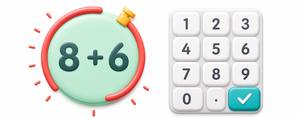
Calculation Against the Clock →
Solve the operation before the pill runs out. The more you get right in a row, the more pills will appear at once.
Executive 10

Spatial Rotation →
Memorize cells on a grid and mark where they'd end up after a rotation. Trains working memory, mental rotation, and spatial orientation.

Mental Mirror →
Memorize a pattern on one side of an axis and reconstruct its exact mirror image on the other side. Trains spatial perception, symmetry, and visuoconstructive planning.

Reactive Body →
Watch shape and color: if they match, tap that object; if not, find the missing object.
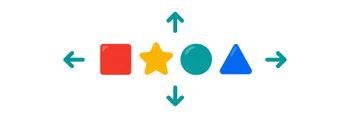
Follow Spatial Instructions →
Read spatial instructions and decide whether the relationship between objects is true before answering.

Cross Responses →
Tap the indicated number and confirm the lateral, crossed, or contralateral response.

Rule Switching →
Classify stimuli by switching the active rule: color, shape, number, or parity.

Órdenes visuales →
Read the instruction, find the right shape and inhibit automatic responses.
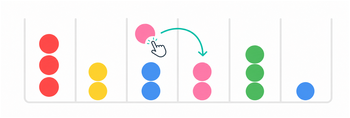
Sort the Balls →
Move colored balls between tubes until each one holds a single color. Every level is generated and verified to always have a solution.
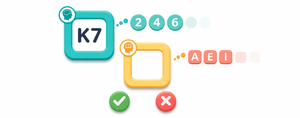
Double Rule →
Two boxes, each with its own rule. Once the rule disappears from the screen, you have to keep remembering it from memory.
Mirror Blocks →
Work out how to turn the piece so that, together with its reflection in the mirror, it forms exactly the image on the card.
Calculo 2

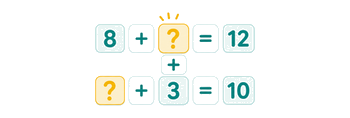
Funciones ejecutivas 1
Lenguaje y cálculo 1

Attention 8

Correct Color →
Match the word and the ink color to train attentional inhibition.

Read the Word →
Name the written word and ignore the ink color.

Flash Color →
The stimulus appears briefly. Remember the ink color.
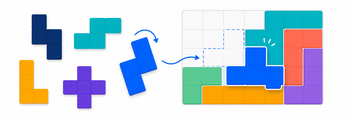
Logic Mosaic →
Place the 12 pentomino pieces on the board, rotating and flipping them as needed, until it's fully covered.

Quick Symbols →
Locate target symbols quickly and accurately.

Animal Mosaic →
Find the exact spot in the mosaic a cut-out silhouette came from and place the piece there; advanced levels also require rotating it.
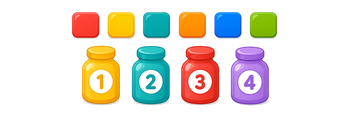
Bottle Sequence →
Follow the fixed color sequence by tapping the color on the palette first and then the bottle with the matching number, starting from 1. Trains sustained attention, numerical tracking, and inhibitory control.
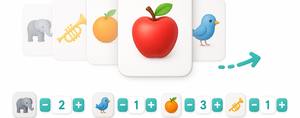
Card Memory →
Cards go by one at a time. At the end, tell us how many times you saw each one.